
Petritsch: It is up to Kosovo now to fulfill its obligations and establish the CSM
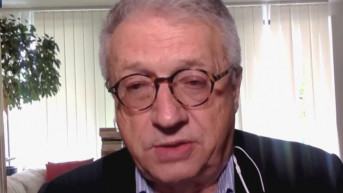
Former EU Special Envoy for Kosovo Wolfgang Petritsch assesses a Serbia's possible change in politics towards Kosovo to be credible and says it is now up to Kosovo to fulfill its obligations.
"A step is being prepared that is very difficult for the Serbian side," Petritsch explained in a statement to the APA agency.
He pointed out that it has been clear to Serbian President Aleksandar Vucic that he has to act, and at the same time, pressure has been increased on Kosovo Prime Minister Albin Kurti, who is on the move.
Petritsch is optimistic that with the new Franco-German plan, a point has been reached from which something will move.
"Once again, it turned out that progress is only possible when Europeans and Americans pull on the same side of the rope," Petritsch added.
He indicates that the pressures on both sides are big, and points out that Serbia must start negotiations on the Franck-German plan, and on the other hand, Kosovo must implement the Community of Serb-majority Municipalities.
"If work on it starts, it would be a breakthrough, which has not been recorded in the region for many years," Petritsch noted.
He assumes that Vucic's recent statement that he could accept the proposal is credible since much now depends on it.
Petritsch emphasized that it was no longer just about territorial issues but about Serbia's economic and political interests. He pointed out that President Vucic had built a successful economic politics that relied on investments and, because of that, he could not afford internally for German investors to turn their backs on Serbia.
He adds that Kosovo is on the move now and must complete its tasks by the CSM establishing, which has been rejected until now by Albin Kurti's Government.
He also estimates that it cannot be expected that Kosovo will be accepted into the UN quickly because Russia will not agree to that in the foreseeable future.
"That distinguishes the Kosovo issue from the Franco-German solution because both countries were admitted to the UN then," he reminded.
At the same time, Petritsch assessed that the danger emanating from Russia was overdramatized so that it could disturb the agreement.
He believes that Russia has other problems, but he adds that Serbia will not distance itself from Russia completely until the Kosovo issue is resolved due to its dependence on gas and Moscow's political support regarding Kosovo's membership in the UN.
He said the EU's weakness is that five members did not recognize Kosovo's independence.
"How can Belgrade be asked to recognize Kosovo when five EU members have not done so? Something has to change there," Petritsch is convinced, adding that the complexity of the conflict is like a three-dimensional game of chess.
0 comments