
Petritsch: Unacceptable refusal of talks, Pristina puts EU in difficult position
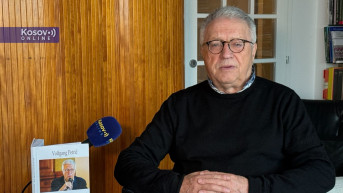
Brussels must act decisively because refusing talks is unacceptable behavior, former European Union envoy for Kosovo Wolfgang Petritsch stated, following the refusal of Kosovo's deputy prime minister Besnik Bislimi to respond to Brussels' invitation to discuss the issue of banning the Serbian dinar in Kosovo.
"My stance on this measure, which surprised me, is critical. I believe that every such issue, no matter how politically legitimate or not, should be discussed," Petritsch noted for Kosovo Online.
He emphasized the need for and agreement to be reached with those affected by this measure, including Serbs in northern Kosovo, as well as Albanians and others who received Serbian pensions.
"When I heard about this measure, I said that it was not a wise political decision by Prime Minister Albin Kurti because I believe it only escalates tensions. Creating a situation that increases tensions is something that should be rejected," Petritsch explained.
He pointed out that now that the regulation had been enacted, with the help of the EU and the support of the US, a transitional solution must be found, a path to compromise.
"It is necessary, first and foremost, to assess the benefits and harms to those affected. This is crucial to address in the near future," Petritsch emphasized.
Although he says he does not know what is being considered in Brussels regarding this issue, he has no doubt that decisive action is necessary.
"Refusal of talks is an unacceptable stance," Petritsch stressed.
He also reminds that this is an election year, and in such circumstances, political boundaries are often tested without consequences.
"This was obviously also the thinking in Pristina, considering that elections for the European Parliament will be held in June, followed by the establishment of a new European Commission. This has put the EU in a difficult position because it is not fully effective. Of course, there are still Miroslav Lajcak and Josep Borrell, and there is a European administration dealing with this issue, but the political weight is decreasing. As long as the pre-election campaign is ongoing, there is no new European Commission, and it is not decided whether Lajcak will continue the mission or who will lead the EU's foreign policy. These are all questions that will be addressed for several more months, which is why I am pessimistic that there will be a good solution before the elections," Petritsch explained.
Therefore, he believes that at all costs, and with increased pressure from Brussels, an attempt must be made to reach at least a transitional solution so that citizens do not suffer.
When asked if it is possible to have another round of high-level dialogue before the European elections, he responds that it is speculated whether dialogue in the phase just before the elections is worthwhile or whether both sides are waiting for the elections for the European Parliament and in the US.
"The elections in the EU and the US will significantly determine the new scenario and the new political environment, as well as the possibilities for negotiations," Petritsch said.

0 comments