
Popovic: The international community has completely failed regarding the return of Serbs to Kosovo
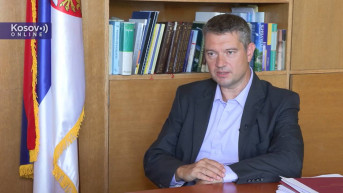
The Assistant Director of the Office for Kosovo and Metohija in the sector for legal protection, support to local self-government, and property-legal affairs, Igor Popovic, assesses that the international community has completely failed regarding the return of displaced Serbs to Kosovo. Even 25 years after the end of the war, there is no mechanism to enable the return of more than 250,000 displaced Serbs.
"When we talk about the return of Serbs and non-Albanians, or internally displaced persons from Kosovo and Metohija, we see that 800,000 Albanians were promptly returned in 1999 from Albania and North Macedonia, and there was a mechanism, an efficient mechanism for their return to Kosovo and Metohija. However, when it comes to more than 250,000 Serbs from the territory of Kosovo and Metohija, there is no mechanism whatsoever. It is simply not talked about," says Popovic in an interview with Kosovo Online.
He explains that the obligation to return the displaced was taken on by the UNMIK mission based on Resolution 1244, and later by the agreement between Serbia and UNMIK, the so-called Hakerup-Covic Agreement from November 2001.
"UNMIK took responsibility for returning internally displaced persons to Kosovo and Metohija, but nothing came of it," emphasizes Popovic.
He adds that the result of such a policy is the fact that the return of Serbs, internally displaced, is the lowest in the world.
"Less than two percent. There was a record of over 250,000 displaced persons, and 11,000 people were returned, of which 5,000 were Serbs. This is simply a very small percentage. We are talking about sustainable return, not about how many returnees were formally registered, but how many of those people actually returned and stayed there to live. That is an extremely small, small percentage," explains Popovic.
He says that the small percentage of returnees is the result of procedures that, among other things, insisted on and promoted individual return of Serbs to areas from which their compatriots were expelled instead of collective return.
Another option, he mentions, were "balance programs": for every Serbian house rebuilt in a municipality, an Albanian house had to be rebuilt as well.
"The largest return after 2001 was recorded in the municipality of Istok, Osojane, Tučep, Saljinovica, Kos, Suvi Lukavac... But, in these areas, people returned collectively, breaking the rules," emphasizes Popovic.
He adds that the international community has completely failed in this segment regarding the return of the Serbian community to Kosovo.
"Neither is it mentioned in public, nor do they treat it as a problem," stresses Popovic.
He explains that returnees, those who have managed to return despite everything, are now facing serious security problems, particularly the theft of their property.
"For every threat to their property, the Office for Kosovo and Metohija addresses all the missions operating there: UNMIK, EULEX, OSCE, the EU Delegation... We detail every attack, describe the victims in detail, we explain everything and they cannot say they don't have the information because they have all the data, but for some political reason, suddenly the return of Serbs is not a problem or a priority for them," emphasizes Popovic.
He says that this impression is also given by the work of the UNHCR, which promotes the integration of the displaced in central Serbia and Vojvodina rather than their return to Kosovo.
"And the return to Kosovo and Metohija should look like these people having access to their property, their households being fully restored, having infrastructure, educational and health institutions, and the possibility of economic development," says Popovic.
In practice, returnees face enormous difficulties, with security being the key issue.
"Huge thefts, property thefts, arson. It's enough for people to go to central Serbia to visit relatives for a few days, and everything will be stolen: livestock from the barn, agricultural machinery, furniture from the house... And all this is treated as crime, not as inter-ethnic incidents aimed at preventing return. Secondly, these returnees are portrayed as war criminals in the Albanian community. We have cities where Serbs are effectively banned: Djakovica, Suva Reka, where when people try to visit their cemeteries or abandoned homes for Christmas, or other holidays, a crowd gathers shouting that they are war criminals and they should be expelled. Unfortunately, arrests also occur," emphasizes Popovic.
He recalls that in 2016, Bogdan Mitrovic, an 80-year-old man, was taken off a bus just because he was going to his village for the Feast of the Nativity of the Virgin Mary.
He spent six months in detention and was then released. Innocent and without fault.
"For them, all Serbs are war criminals, and that’s why we have a situation where there is practically no security protection, no protection from politically motivated prosecutions. Secondly, the issue of property. Property is being usurped," says Popovic.
He adds that there are Serbs in rural areas, villages, but a huge problem is that their agricultural land has been usurped.
"For security reasons, people do not dare to cultivate their land beyond their homesteads, even though it is theirs," he explains.
He adds that the situation is much worse in large cities, which have been practically devoid of Serbs since the 2004 March pogrom.
"In Serbian areas in cities, there is practically no return. These cities have been ethnically cleansed, unfortunately, since 2004. The last Serbian urban communities in Obilic, Kosovo Polje, Pristina, Gnjilane, Vitina were cleansed then," concludes Popovic.

comments