
Prorokovic: I don’t believe Arab states will change their positions on Kosovo and Metohija
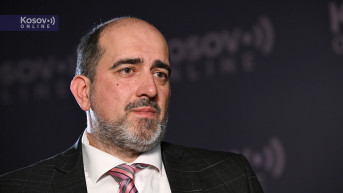
Senior Research Fellow at the Institute of International Politics and Economics in Belgrade, Dusan Prorokovic, told Kosovo Online that the international environment is becoming so complex that he doubts a large number of countries — or even a few, especially in the Arab world — will change their positions on Kosovo and Metohija.
Commenting on the recent meeting between Kosovo President Vjosa Osmani and the Secretary-General of the Arab League, Ahmed Aboul Gheit, during which she emphasized the need for support in securing recognition of Kosovo from the member states of the organization that have not yet done so, Prorokovic said that everyone is simply doing their job and that Osmani’s lobbying efforts are not surprising.
Given that Gheit is from Egypt — a country that recognized Kosovo but later “froze” that decision — Prorokovic noted that the fact the Secretary-General of the Arab League is Egyptian does not necessarily mean anything.
“International organizations have their own structure, logic, and founding documents. He is there to represent the position of an international organization, not that of Egypt, and his statements are directed accordingly, because within the Islamic world and the Arab League there are countries that have established bilateral relations with Pristina and others that are strongly opposed to it and that largely support Serbia,” Prorokovic explained.
He added that Osmani’s meeting with Gheit was a protocol event and that he does not believe it could yield significant results, since, as he put it, bilateral initiatives of this kind do not reveal any new truths or influence changes in position.
“The stance on Kosovo is shaped by the international environment, and that global or strategic context is becoming so complex that I doubt any significant number of countries — or even a few — will change their positions on Kosovo and Metohija, especially in the Arab world. The issue is now being viewed through the lens of the Israeli-Palestinian conflict, the war in Ukraine, and the new initiatives emerging almost daily concerning the Middle East, which remains one of the priorities in the strategies of the Arab League. Because of all this, I believe the scope of Osmani’s talks will be very limited,” Prorokovic said.
Although he does not rule out the possibility that in the coming months some country might “pop up” and establish bilateral relations with Pristina, he emphasized that such a move would not be the result of systematic work or lobbying but rather an incidental occurrence.
Recalling that in 2021 the Arab League strongly condemned Pristina’s decision to open an embassy in Jerusalem, Prorokovic believes that this decision remains a major stumbling block in Kosovo’s relations with Arab states. He also pointed out that Kosovo’s embassy was only the third to be opened in Jerusalem, and that UN General Assembly resolutions on the city are unequivocal and strict.
“Even those Arab countries that have to some extent normalized relations with Israel continue to insist on the issue of East Jerusalem — that is, on a special status for the city to be implemented through the two-state solution. This move was a slap in the face for them, and I don’t see how the authorities in Pristina, the Albanians there, could possibly mitigate this in their talks with Arab representatives. It will be very difficult for them to explain why they did it and how they came to have such close ties with Israel — particularly with the government of Benjamin Netanyahu, who is deeply unpopular in the Arab world and is seen there as one of the key threats to their security,” Prorokovic explained.
He added that this could even serve as a useful argument for Serbia to lobby for de-recognition of Kosovo among Arab League countries that have established diplomatic relations with Pristina.
Prorokovic also noted the existence of a limiting factor — the so-called “Vucic–Trump Agreement” (the Washington Agreement of 2020), which includes a clause stating that Serbia would also move its embassy to Jerusalem, “no matter how Serbia contextualizes or interprets that.”
After Israel recognized Kosovo’s independence following the signing of the Washington Agreement, Belgrade, it should be recalled, announced that Serbia’s position on relocating its embassy had changed in light of new circumstances.



0 comments