
Tanaskovic: I doubt the Arabs will deal with Kosovo amid their own concerns
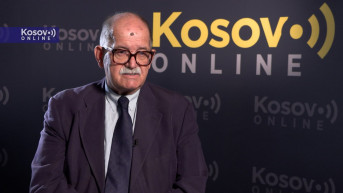
Islamic scholar Darko Tanaskovic told Kosovo Online that there are no indications of significant changes in the position of the Arab League member states regarding the recognition of Kosovo’s independence, and he doubts that the Arab countries, amid their own numerous concerns, will devote attention to this issue. If any changes were to occur, he believes they would likely be induced by external influence.
As a reminder, during her stay in New York, Kosovo President Vjosa Osmani met with the Secretary-General of the Arab League, Ahmed Aboul Gheit, and on that occasion emphasized the importance of cooperation between Kosovo and the Arab League, as well as the need for support in securing recognition from those member states of the organization that have not yet taken this step.
Tanaskovic observed that the authorities in Pristina continuously strive to use every international gathering — especially sessions of organizations within the UN system — to lobby for the recognition of Kosovo’s statehood and international subjectivity.
“In the statements they give after such actions — accompanied by many photo opportunities — they typically create the impression that they were met with understanding, that they succeeded, and that they have reason for optimism. Such behavior is, after all, quite logical and not unique to Kosovo politicians; however, in their case, the gap between the appearance they want to create and reality is somewhat larger than advisable,” Tanaskovic assessed.
He also explained why many Arab countries have not recognized Kosovo.
“Those Arab states that did not recognize Kosovo in the initial wave, and resisted pressures both from within the Arab and Muslim world and from external actors to do so, generally had clear and well-defined reasons for their position — mostly determined by the specificities of their international status and their own domestic and foreign policy circumstances,” he said.
According to Tanaskovic, the current moment in international relations is highly dynamic and turbulent on all levels — global, regional, and local — with constant shifts taking place among the actors of world affairs.
He noted that, in the present global constellation — where all players are trying to position themselves as favorably as possible, both currently and prospectively, within the new coordinates of a rather rough geopolitical contest among the most powerful — the issue of recognizing Kosovo’s independence is certainly not anyone’s priority, except for the politicians in Pristina.
“Of course, that doesn’t mean there can’t be changes in the positions of some Arab countries toward the recognition of Kosovo’s independence, but I believe that such changes would not stem from the authentic motivations of those potential recognizers — rather, they would be induced by foreign influence,” Tanaskovic pointed out.
He added that even Israel recognized Kosovo at the time due to U.S. political maneuvering and Donald Trump’s pre-election needs — without having any genuine or substantial national interest in doing so, as some Israeli diplomats have informally admitted.
“Under current and foreseeable circumstances, it cannot be expected, for example, that Egypt — which has practically frozen Morsi’s arbitrary recognition of Kosovo — would change its position. The same goes for Morocco and Algeria, even though Algeria’s dispute with Rabat over Western Sahara somewhat complicates its relations with Belgrade. However, some Arab states that are unstable and in a fluid condition could succumb to outside influence (and money), but even that is uncertain because inter-Arab and inter-Muslim relations are extremely complex, with intersecting interests and sensitivities to various vectors of global change,” the professor explained.
According to Tanaskovic, one state that could potentially influence Damascus to reconsider its stance on Kosovo is Turkey, which has for years persistently and “energetically” lobbied for Pristina — all while officially proclaiming a “historic peak” in its relations with Serbia.
“After all, Ankara’s role, together with Albanian money, also played a part in the contradictory case of Sudan’s recognition of Kosovo, where it wasn’t even clear who actually held power in that war-torn country. There are also Iraq and Lebanon… Nevertheless, I doubt that the Arabs, generally speaking, will deal with Kosovo amid all their other concerns. They’re not even properly addressing the Palestinian tragedy... In Pristina, they often rely on the fact that Arab countries are also Muslim and thus appeal to Islamic solidarity, but that argument — which was already tried back during the war in Bosnia — failed to gain traction among the Arabs or most Muslim countries, since it was understood that this was not a case of interreligious conflict,” Tanaskovic noted.
Despite everything — and despite Serbia’s objectively strengthened position in the Arab world — he emphasized that Belgrade must continue to monitor, with close diplomatic attention, even the slightest indications of shifts in any country’s stance on the Kosovo issue.
“No need for panic,” Tanaskovic concluded, “but utmost responsibility and proactive engagement are necessary.”



0 comments