
Radic: Turkey is strengthening its influence in the Western Balkans by arming Kosovo
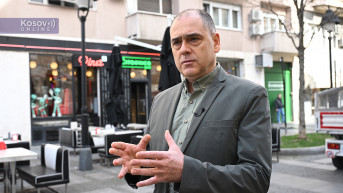
Military analyst Aleksandar Radic emphasizes that Turkey and Kosovo are building a "brotherhood in arms," which, as he highlights, is part of Ankara's broader plan to build bridges and strengthen Turkish influence in the Balkans.
Radic points out that Turkey is equipping the KSF with a variety of weapons.
"At the moment, Turkey and Kosovo are building a brotherhood in arms. Over the past few years, Turkey has been sending large quantities of weapons and military equipment to the KSF, and these are not trivial means. Among them are anti-tank guided missile systems with a range of four kilometers, 120-millimeter mortars, and much more," Radic told Kosovo Online.
He notes that until a few years ago, Kosovo was expected to foot the bill for the weapons, but now that bill is no longer as important because, as he says, Ankara's political imperative is to strengthen its influence in the Balkans.
The arming of Kosovo, he emphasizes, is part of a broader political project through which Turkey is building bridges and bulwarks toward the countries of the Western Balkans, wherever they deem it politically expedient.
Radic says that when the relationship between Kosovo and Turkey is brought up, military cooperation immediately comes to the forefront, which involves arming and military equipment, training KSF personnel, various courses, and joint exercises, both bilateral and multilateral.
He recalls that KSF members had the opportunity to participate in broader NATO exercises in Turkey and engage in live-fire exercises on a Turkish range. However, Radic points out that the Turkish military presence in Kosovo is not only what is visible and talked about, but there is also much "strange activity around the airport in Djakovica."
"That place was built by the Italians after the withdrawal of Yugoslav security forces in 1999 to supply and maintain communication with the Italian contingent in the Metohija area. When the need for such engagement passed, the Italians withdrew and left the airport empty. There were various stories in Kosovo about how some commercial flights should be arranged, but none of that materialized in the end. Now the purpose of that airport is mysterious because unmanned aerial vehicles Bayraktar TB2 are located there. They are presented as KSF equipment, but those of us who are in the interested part of the public somehow think that they are still in Turkish hands," Radic said.
According to him, there is no evidence that these drones are owned by the KSF because then they would be under the control of KFOR, or NATO.
The fact that TB2 aircraft flew at will during some crisis moments, such as the incident in Banjska, indicates that they belong to a third party, Radic explains, adding that only Turkey can be the operator given that these are aircraft of Turkish production.
When asked whether Turkish support boosts Kosovo's confidence on the international stage and emboldens Pristina for military plans, Radic emphasizes that Pristina has had the support of most Western countries and has never been questioned by leading NATO or EU member states that Kosovo is an independent country.
From their perspective, it has been so, and they have helped strengthen the KSF, as Radic notes.
"But when new laws were passed in December 2018, and when these forces were tasked with protecting Kosovo's territorial integrity and sovereignty, meaning the conventional task of the army, KFOR's stance was clear – we stick to the old law," the analyst reminded.
He pointed out that the duality of Western powers looks strange but explains that when Americans, Germans, and others help arm Kosovo, it is more or less visible, which is not the case with Turkey.
"Turkey's ambition is a new support for Pristina, and a force has been created that, not for some pragmatic and momentary reasons but for reasons deeply rooted in history that have a solid, strategic, and sustainable basis, supports Kosovo at this moment," Radic concluded.
He warns not to forget when Erdogan visited Prizren a few years ago and said, "Turkey is Kosovo, and Kosovo is Turkey."
That was, he explains, a very clear message that applies to both Pristina and Sarajevo.
"Turkey has been showing this for the last two years in part. If you are allies of Turkey, you will get a Turkish automatic rifle to put on your shoulder," he notes.
Commenting on the relationship between Belgrade and Ankara, Radic assesses that Serbia is trying to play in the given circumstances, emphasizing that it is not intelligent to confront Turkey.
"At this moment, Serbia must swim and seek an intermediate space because the Turkish government knows how to show positive signals to Belgrade, but the fact is that there is no longer talk of buying Turkish drones and military-technical cooperation, which until recently was one of the topics. Vucic boasted a lot about his good relations with Erdogan, he said that he had called Erdogan on the phone and arranged the procurement of Bayraktar TB2, but since those drones are at the Djakovica airport, the goodwill of Belgrade to further deal with that topic has somehow been lost," Radic pointed out.

0 comments