
Ulger: Turkey's close relations with Albania and Kosovo do not pose a threat to Serbia
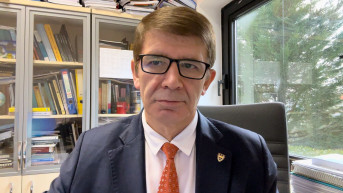
Turkey has historical and cultural ties with the region. However, its close relations with Albania and Kosovo do not pose a threat to Serbia. Regarding military cooperation between Ankara and Pristina, it shows that Turkey supports Kosovo's independence, sovereignty, and territorial integrity, and Belgrade's concern about this is unjustified, Prof. Dr. Irfan Kaya Ulger from Kocaeli University, says for Kosovo Online.
He also notes that Hashim Thaci is a very close friend of Erdogan, and Turkey, as he emphasizes, desires democracy, border inviolability, and peace in the Western Balkans.
"When the Warsaw Pact and the former Yugoslavia fell apart, Turkey sought to establish close relations with Eastern European and Balkan countries. In the 1990s, the countries with which Turkey had the best relations were Bosnia and Herzegovina, Albania, and Macedonia. Kosovo was added to these countries in the early 2000s. Turkey is one of the leading countries supporting Kosovo in the Western Balkans. It opposed the ethnic cleansing operation carried out by former Serbian President Slobodan Milosevic in Kosovo and supported NATO's intervention. After becoming independent on February 17, 2008, Turkey established very close relations with Kosovo," he says.
Ulger also believes that the Western Balkans today serve as a buffer zone between major powers.
"On one side, the EU and the US, on the other side, Russia, and even China seek to establish dominance in that area. Turkey is aware of all of this, having historical and cultural ties to the region. Today, Turkey has close relations even with Serbia. By using these relations and its influence on Serbia, Turkey seeks to prevent the deepening of conflicts. Erdogan has taken the initiative in this context once or twice. He particularly made it clear to Aleksandar Vucic that Serbs in northern Kosovo should not be encouraged and that Serbia should respect Kosovo's territorial integrity. But this is the reality. Turkey's close relations with Albania and Kosovo do not pose a threat to Serbia. Serbia has been negotiating with the EU since 2014 and has committed to respecting the territorial integrity of its neighbors. Serbian nationalists, on the other hand, encourage the Serbian minority living in Kosovo on one side and in Bosnia and Herzegovina on the other side to engage in separatism to unite with Serbia. Russia is a country that supports this. When Ukraine was attacked, only Belgrade in Europe held demonstrations in favor of Putin. Therefore, I want to state that Turkey's close relations with Kosovo do not pose a threat to Serbia. But if Serbia supports separatists in Kosovo or in Bosnia and Herzegovina, Turkey is against it," he says.
Regarding military cooperation between Turkey and Kosovo, including equipment procurement by Pristina for the KSF, he notes that Ankara sells defense industry products to many, including Kosovo.
"This is a normal exchange. It also shows that Turkey supports Kosovo's independence, sovereignty, and territorial integrity. Serbia's concern about this is unjustified. In fact, this situation has not created a military imbalance in the region. There are peacekeeping forces in both Kosovo and Bosnia and Herzegovina. The inviolability of borders and non-interference in internal affairs are the most basic rules of international law. One by one, countries in the region are joining NATO on one side and the EU on the other side. Under these circumstances, Turkey's balanced policy should not disturb anyone. However, it is in the interest of Serbian nationalism, which has expansionist ambitions, to take into account the Turkish factor," the professor from Kocaeli University says.
He also emphasizes that "Turkey has been contributing to establishing peace and dialogue between Serbia and Kosovo from the beginning."
"The decision of the Government of Kosovo led by Albin Kurti regarding Kosovo passports, ID cards, license plates, and driver's licenses is good. A sovereign state should do this. On the other hand, Serbia is a country negotiating with the EU and should be committed to peace and stability. It should not interfere in the internal affairs of neighboring countries. That's also why the EU is warning the Government of Serbia. And let's not forget this: according to Martti Ahtisaari's plan, Kosovo's territory today is indivisible. Therefore, organizing minorities living in Kosovo into something called the Community of Serb Municipalities is wrong and does not serve peace in the region. Unlike the period of war in Bosnia, Turkey's close relations with Serbia have opened the door for Turkey to exert pressure on Serbia using its soft power. From this perspective, it is clear that Turkey is an important actor in establishing the dialogue between Kosovo and Serbia," Professor Ulger says.
Finally, he also emphasizes that it is very important that the command of KFOR has been taken over by Turkish General Ulutas.
"This mission is symbolic on one hand and important as a mission that strengthens Turkey's historical and cultural weight in the Western Balkans."

0 comments