
Radojkovic: Due to Kurti's actions, the implementation of the agreements reached in Brussels is in question
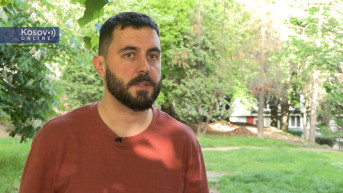
Historian Stefan Radojkovic assessed that the only sustainable solution for the Serbian community in Kosovo would be the continuation of Serbian institutions, but that moves made by Pristina have created a "new situation" in which it is questionable to what extent the agreements reached can be implemented, including the function of the Community of Serb Municipalities.
“A sustainable solution is the continuation of Serbian institutions in Kosovo and Metohija. That is absolutely priority number one, especially concerning education, culture, healthcare, but also other social and public institutions that have been there. Allegedly, the goal and plan were for them to be incorporated within the framework of the Association of Serb Municipalities; however, all of that was part of the package of Brussels agreements from 2013 and 2015, which now amount to nothing more than a dead letter. Thus, Kurti’s moves on the ground seem to have created a new situation where it is simply a question of to what extent that agreement can be implemented,” Radojkovic stated for Kosovo Online.
The analyst further added that the most ideal solution for guaranteeing the survival of the Serbian community in Kosovo would be the respect of decisions made by the UN Security Council.
“The most ideal situation would be to respect UN Security Council Resolution 1244,” he clarified, commenting on the statement by the EU Ambassador to Pristina, Aivo Orav, that the Union "wants a sustainable solution for the Serbian community in Kosovo."
Radojkovic noted that Orav’s statement is actually a "prelude" to the second part of the "Balkan tour" of the European Union’s High Representative for Foreign Affairs and Security Policy, Kaja Kallas.
It is expected that Kallas will insist, both in Belgrade and in Pristina, on the respect of signed agreements, from 2013 up to the most recent ones that elaborate on the path to implementing the Brussels Agreement.
“However, it seems that this is 'too little, too late.' There have always been too few such statements, and we can see that during Kurti's administration, there has been, in effect, a nullification of any relations between the Serbian community and Pristina, especially in the north of Kosovo. However, Serbs south of the Ibar River have also felt that they are not truly a community welcomed by the majority Albanian population in Kosovo. And now this list of beautiful wishes is supposed to revitalize the Brussels dialogue, which at the very least has reached a deadlock, and it could be said, with some difficulty, that it is clinically dead,” Radojkovic emphasized.
He therefore interprets Kallas’ visit as the EU's attempt to emerge from the "limbo" it has found itself in due to new geopolitical upheavals.
“Kaja Kallas is coming to essentially confirm that the Western Balkans is the backyard of the European Union, especially now in this process of reshuffling the global deck between Russia, the US, and China, where Europe has found itself in a limbo and is now trying to at least reaffirm itself as a major regional player,” Radojkovic believes.
He is convinced that the EU will attempt to achieve this by offering the region a kind of "carrot" through a financial Growth Plan and new funding programs.
Radojkovic also points to an additional problem for the EU regarding Pristina – its growing closeness to Turkey.
“As for Pristina, they will try a bit with the sanctions that have been imposed, and will not support membership in the Council of Europe. We will see whether that will have a decisive impact, but it seems that Kaja Kallas’ visit is somewhat forced by global developments. Frankly, it should be noted that the President of the Pristina administration, Vjosa Osmani, recently visited Ankara and is likely expecting greater support from Turkey than from the EU,” Radojkovic concluded.



0 comments