
Radojkovic: Kurti in a permanent campaign, needs to create enemies – Currently, it’s the Constitutional Court
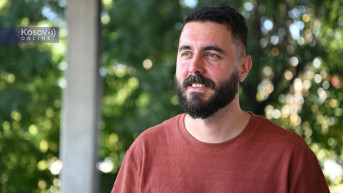
Historian Stefan Radojkovic assessed that Kosovo’s caretaker Prime Minister Albin Kurti is in a constant campaign mode and needs to create opponents, and that his current target is the Constitutional Court of Kosovo.
Speaking to Kosovo Online, Radojkovic said the relationship between Kurti’s caretaker government and other institutions of the Pristina administration is interesting because Kurti has been in a state of permanent campaigning ahead of the upcoming local elections in Kosovo.
“At this moment, Kurti’s opponent is the Constitutional Court, which determined that secret voting is not in line with the spirit of the constitutional framework of the Pristina administration. In this sense, Kurti had to find a scapegoat. In Kosovo and Metohija, this usually means the Serbs. In this case, it is specifically one person from the Constitutional Court of the Pristina administration—sending a clear message to the Serbian community in Kosovo and Metohija: even those individuals who appear to be well integrated into the Pristina administration are not protected in any way. Their basic rights are not guaranteed, let alone any adherence to legal norms and standards,” Radojkovic said.
He was referring to criticisms voiced by representatives of the Self-Determination movement toward the Constitutional Court over its decision regarding the constitution of the Assembly, as well as to accusations made by caretaker Justice Minister Albulena Haxhiu against Constitutional Court judge Radomir Laban, whom she labeled a spy.
Radojkovic considers the Constitutional Court’s decision logical because voting in parliament should be public and transparent.
“Voting in local or other elections is, as a rule, secret in all more developed democracies—which is normal. What is unclear is why the majority, led by Self-Determination, wanted secret voting—most likely to exert a certain influence on some potential future coalition partners or individuals who might take part in the government,” the historian stressed.
He added that the current authorities in Pristina must always have an enemy.
“At the moment, enemy number one is the Serbs, and that is always the case when there is a crisis in inter-Albanian relations. Usually, it is the Serbs who pay the price for such tensions. As for the security vetting by the Pristina administration, I believe Laban would not be in that position if his background had been questionable in any respect. He is someone who has gone through the Pristina system’s vetting process. Apparently, that is still not enough to be seen as a ‘good’ or ‘cooperative’ Serb in Kosovo, which only proves that the talk of multiculturalism and of a multiethnic community is a mirage—a performance staged for a while before the eyes of the European and global public. I do not think anyone believes it anymore,” Radojkovic concluded.



comments