
Radojkovic: Kurti will never implement the Community of Serb-majority Municipalities
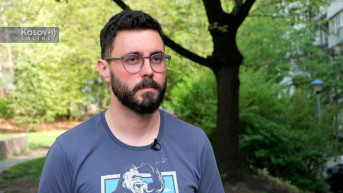
Historian Stefan Radojkovic stated that Pristina has no intention of implementing the provisions of the Brussels Basic Agreement and that the government of Albin Kurti cannot be expected to move toward, let alone implement, the establishment of the Community of Serb-majority Municipalities (CSM).
Marking 13 years since the signing of the Brussels Agreement, Radojkovic told Kosovo Online that today it is Serbs who refer to the document more frequently, while for the European Union it ranks relatively low among priorities.
“It would seem that Serbia mentions it the most, and the European Union to a lesser extent, although it should be the guarantor of the implementation of that first of several agreements reached starting in April 2013 and supplemented in 2015. It appears that Pristina has no intention of implementing the Brussels Agreement—not only does it avoid mentioning it, but it is doing everything to strip it of meaning and to change the situation on the ground to such an extent that the document becomes irrelevant, nothing more than a dead letter on paper,” Radojkovic said.
He added that this should not come as a surprise, pointing out that Serbs are facing existential challenges, and that their survival in Kosovo without the institutions of Serbia is, at the very least, uncertain and in essence seriously endangered.
He recalled that the CSM was originally intended to ensure, in some form, the continuation of institutions financed by Serbia, while operating within the framework of the Pristina administration.
“That was the initial idea when the agreement was signed by Hashim Thaçi and Ivica Dacic back in 2013, but we have seen that one side has fulfilled almost nothing, despite having only one key obligation,” Radojkovic said, adding that the Serbian side also acted “rather naively.”
“You had something tangible on the ground that functioned, that ensured not only functional survival but also a meaningful life for those people. Among other things, those institutions were also used by members of the Albanian community. There are countless identity cards and passports issued by those Serbian institutions in Kosovo and Metohija, and now you have a situation where such services are effectively unavailable to all residents of Kosovo and Metohija,” he explained.
Given that the Serbian community is the most vulnerable in Kosovo, it is not surprising that representatives of the Serb List continue to insist on the Brussels Agreement, he added.
“The Republic of Serbia is calling for its provisions to be respected, but we have already seen, including through decisions of the Constitutional Court of the Pristina administration, that they likely do not intend to implement any of it—something that has only intensified with Kurti’s rise to power,” Radojkovic said.
He also noted that although the European Union insists on the Brussels Agreement when it comes to its own credibility, given its internal situation and the security and foreign policy challenges it faces, the agreement is “quite low” on the EU’s list of priorities.
“They will insist on it, there will be a kind of shuttle diplomacy by EU representatives such as Peter Sørensen, but there are fewer and fewer levers, and fewer incentives—whether through sanctions or rewards—to motivate Pristina to adhere to the letter of the agreement. That would mean Serbia could, from a legal standpoint, withdraw from these agreements without concern. If it wished, it would have every right to do so,” he emphasized.
Nevertheless, Radojkovic assesses that this is also a matter of political judgment, as Kurti is not interested in the Brussels Agreement, just as he was not interested in the UNMIK mission during its full mandate.
“Kurti generally adheres very strictly to the ideology he promotes. One cannot expect from him or his government that they will ever move closer to, let alone take steps toward establishing the Community of Serb-majority Municipalities. It is illusory to believe that such a thing will happen—one need only follow his statements from 2004 to the present to see that he is highly consistent in implementing his policies, both toward international actors and toward the Serbian population in Kosovo and Metohija,” Radojkovic said.
Today, 13 years after its signing, he concludes that “we are further away from the Brussels Agreement than ever.”
“EU membership is increasingly distant; we have not moved from a deadlock. The Union has at least partially fulfilled part of its promises by granting candidate status, but everything else can be considered largely meaningless. In that sense, we are moving further away from the Brussels Agreement. It will likely be remembered similarly to the Oslo Accords, which were supposed to mark the end of the conflict between Israelis and Palestinians in the Middle East, but instead led to further deterioration of relations. The situation prior to the Brussels Agreement was, in a way, more stable for both Albanians and Serbs in Kosovo and Metohija,” Radojkovic concluded.

0 comments