
Radosavljevic: Kurti’s new laws more dangerous than the abolition of the dinar, citizens fearful and without clear answers
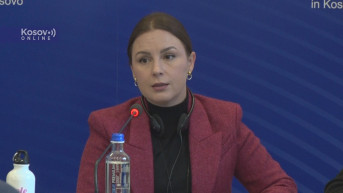
The Executive Director of the New Social Initiative, Jovana Radosavljevic, told RTS that the new Law on Foreigners will most severely affect people who live in Kosovo but do not have Kosovo-issued documents, including workers and students within the Serbian education and healthcare systems. She adds that it remains unclear what the status will be of those coming from central Serbia.
Under the Law on Foreigners, all persons who do not hold Kosovo citizenship are considered foreigners and are required to register their residence with the Kosovo police, while the Law on Vehicles provides for a ban on driving a vehicle on the basis of an authorization if the driver does not have residence in the country in which the vehicle is registered.
The implementation of Pristina’s regulations has been postponed several times, but, as assessed by the Executive Director of the New Social Initiative, Jovana Radosavljevic, there are currently no realistic indications that the deadlines will be postponed again.
“As things stand now, implementation will most likely begin on 15 March, with the possibility that certain technical difficulties will be resolved along the way,” Radosavljevic told RTS.
Radosavljevic emphasizes that those most affected are people who live in Kosovo but do not have Kosovo documents, including workers and students within the Serbian education and healthcare systems.
“These regulations raise more questions than they provide answers, and their consequences are even more far-reaching than the ban on the use of the dinar,” she warns.
According to her, the application of the laws could have a direct and negative impact on the functioning of healthcare and education within the Serbian system in Kosovo.
She stresses that precisely these two sectors, as the last institutional pillars of the Serbian community, could be the most endangered.
University in North Mitrovica among the most affected
Particular concern relates to the University of Pristina with a temporary seat in North Mitrovica, which is not accredited within the Kosovo system.
At the same time, 15 March is also the deadline for submitting applications for the verification of diplomas obtained within the Serbian education system, further complicating the position of students and employees.
The procedure for registering residence in Kosovo has formally already been enabled, but it remains unclear how it will be applied to workers and students engaged in institutions that the Kosovo authorities do not recognize.
“The key question is whether people who work and study in institutions of the Serbian system will be able to obtain residence and work permits,” Radosavljevic emphasizes.
According to announcements so far, certain categories could be exempt from the application of the law, such as persons holding Serbian documents issued for cities in Kosovo or those with family ties.
However, the fate of people coming from central Serbia who do not have such documentation remains uncertain.
International vehicle authorizations no longer valid
If the laws are applied strictly, those who fail to register their residence could face fines, as well as much harsher measures.
“There is a real risk of deportation, and even of a ban on entering Kosovo,” Radosavljevic warns.
A large number of vehicles in Kosovo are still registered with license plates from central Serbia, although some vehicles transitioned to Kosovo registration in the previous period.
Many citizens use vehicles registered to family members or friends, which further exposes them to the risk of new restrictions.
“Vehicles with Serbian license plates are treated as foreign, and international authorizations will no longer be of any use,” Radosavljevic states.
She adds that there are indications that the re-registration process might be reopened, but without clear information on the conditions.
Integration as a controversial political issue
Announcements regarding the integration of healthcare and education as of 15 March have caused additional concern among the public.
Radosavljevic emphasizes that this is a political process that must be addressed within the framework of the Brussels Dialogue.
“The application of the Law on Foreigners and the integration of healthcare and education are two completely different processes and must not be conflated,” Radosavljevic stresses.
According to her, unilateral moves by Pristina are not in the spirit of dialogue and cannot lead to a sustainable solution.
She recalls that Kosovo lacks not only political but also financial capacity to integrate these two sectors, as evidenced by annual budget announcements.
As she notes, it is uncertain whether budget lines for such processes have even been envisaged.
Radosavljevic believes it is far more accurate to speak of legalization rather than integration of Serbian institutions.
She also recalls that the 2023 draft statute of the Community of Serb-majority Municipalities provides for an independent education and healthcare network financed by Serbia.
Diploma verification without guarantees
The process of diploma verification, although it formally enables the acquisition of professional licenses, does not guarantee employment within the Kosovo system.
“Verification of diplomas does not mean automatic integration,” Radosavljevic emphasizes.
She warns that this process could serve as a basis for intensified controls and pressure on institutions of the Serbian system.
“There is concern that inspections will be used as a mechanism of pressure,” she says.
The guest of the morning program assesses that 15 March is already perceived by the public as a “D-day,” since several processes either conclude or begin on that date.
Citizens, she notes, are living in fear and uncertainty, without clear answers as to what awaits them after the laws enter into force.
Radosavljevic stresses that answers to these questions lie with official Belgrade, Pristina, and the international community.
The Executive Director of the New Social Initiative concludes that the public must be informed in a timely manner about all diplomatic activities underway in order to reduce uncertainty and fear among citizens.


0 comments