
Radovanovic: Damage from the ban on the import of Serbian goods to Kosovo exceeds 200 million euros
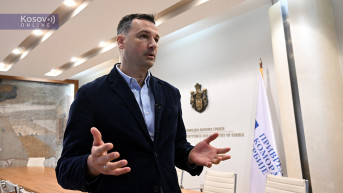
The head of the Center for Regional Cooperation of the Chamber of Commerce of Serbia, Aleksandar Radovanovic, says that over the nine months that Pristina's ban on Serbian imports to Kosovo has been in effect, the Serbian economy has suffered losses exceeding 200 million euros, measured solely in undelivered goods.
"According to estimates made by the Chamber of Commerce of Serbia every month, by January 1st, the total damage from undelivered goods amounts to around 160 million euros. If we were to add the last two months of this year, it would be more than 200 million euros," Radovanovic says for Kosovo Online.
He reminds that the ban is only in effect for finished products, as Pristina amended its initial decision in mid-June 2023 by lifting the ban on raw materials, machinery, fertilizers, and some semi-finished products due to issues in the supply chain of Kosovo's manufacturing sector.
"They realized that they were causing significant damage to their economy by banning the import of raw materials, machinery, and semi-finished products," Radovanovic says.
As he notes, Pristina's measure also damages international companies with production facilities in Serbia.
"All major global systems that have invested in Serbia and have their production facilities are suffering significant losses. Just take 'Coca-Cola,' for example, which is a major supplier. They incurred huge losses due to the inability to sell their products on the Kosovo market, and they had to redirect their supply from other centers, specifically from North Macedonia," Radovanovic notes.
Comparing Serbia's exports to Kosovo in 2023 with those in 2022, according to our interlocutor, there has been a 30% decrease.
"That's around 150 million euros, and these are finished products that cannot be delivered, and about 40% of these finished products are produced by international companies that are also heavily affected by this ban," Radovanovic says.
He points out that a very negative atmosphere is being created, as if it's undesirable for companies from Serbia and Kosovo to cooperate.
"That's not the case. There is interest among businessmen. There is trust as well, so this measure is not in line with what the business communities want. We are in daily communication with the Chamber of Commerce of Kosovo and collaborate on a multilateral level through the Chamber Investment Forum of the Western Balkans, but we also collaborate directly when it comes to company issues, exchanging information, and trying to move things forward," Radovanovic says.
Asked if the Chamber of Commerce of Kosovo can influence the revocation of the measure by the Kosovo authorities, he says that the Chamber was not consulted when the measure was implemented.
"The possibilities for the Chamber of Commerce of Kosovo to help in this situation are limited. Partners assisting in the dialogue between Belgrade and Pristina could probably help, primarily the European Union and the United States. We invite them to somehow enable normal traffic of goods between Serbia and Kosovo," Radovanovic says.



0 comments