
Rajic: Austria's Stance on Kosovo Can Only Be Changed by Kurti's Political Autism
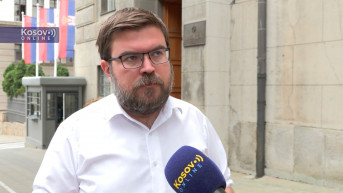
Political analyst Predrag Rajic told Kosovo Online that whoever wins the Austrian elections on Sunday will maintain correct relations with Serbia. He noted that it is unlikely that Austria's foreign policy regarding Kosovo will change and that only "Kurti's political autism" could contribute to such a shift.
Rajic stated that the Freedom Party, which, according to polls, has the highest popularity, has already been part of the Austrian government twice, so it would not be surprising if they join again for a third time, although the chances of such a coalition are slim.
"I think there is now a certain distinction being made, for example, between the AfD in Germany and the Freedom Party in Austria. It seems to me that these established parties in Austrian history, if we can call them that, including the People's Party, view the Freedom Party as part of the mainstream. I don't think they are seen anymore as an extreme option with which no collaboration is possible under any circumstances. They have already collaborated before, and it is not impossible for that to happen again. The outcome of these elections could indeed be a coalition between the Freedom Party and the People's Party. I'm not saying it's certain to happen, but there is a real chance. Unlike in Germany, where I don't even see a theoretical chance that after next year's elections the CDU would collaborate with the AfD," Rajic concluded.
When it comes to Austria's relations with Serbia, Rajic points out that there are quite a few friends both within the Freedom Party and other political options, but it is unlikely that Austria's foreign policy will change.
"You'll recall that President Vucic had excellent relations with Sebastian Kurz, the then - chancellor and leader of the People's Party. It's hard to expect the foreign policy of countries like Austria to change suddenly. Austria is a country that has consistently supported the project of the so-called state of Kosovo. It's possible that Kurti's political autism, if I may call it that, could somewhat help us, because I think he is someone who is continuously making enemies in the West. Though he hasn't faced nearly as much backlash from his partners and patrons as he should for his misdeeds, that might be something that could help us," Rajic explains.
He believes that whoever is in power in Austria in the upcoming period will maintain correct relations with Serbia. He adds that even under the current government, made up of the People's Party and the Greens, Serbia has good cooperation, despite the fact that, as in Germany, there are individuals within the Greens who are openly pro-Albanian and even act as Albanian lobbyists.
"This certainly complicates our relations with Vienna to some extent, but I would say that the People's Party has clearly recognized the strength of Serbia and everything our country has achieved in recent years, including President Aleksandar Vucic's vision and, ultimately, his popularity and the success of the Serbian Progressive Party (SNS) in all the recent elections. There is also a pragmatism in the Austrians-they simply want to cooperate with the ruling forces in Serbia and maintain decent relations with the country that is the most influential in this part of Europe. Austria views the entire former Yugoslav region as its natural zone of interest, where it is present both economically and politically," said Rajic.
When asked if the rise of the Freedom Party could lead to a shift in Austria's stance on the Kosovo issue, he says that this is unlikely.
"For that to happen, you would need an absolute majority in the Austrian parliament. I don't see the People's Party being willing to accept such a change, and the Freedom Party won't win an absolute majority on its own--that's impossible. They might be the most popular individual party, but they will still need to form a coalition with someone. So, while it would be great - and we have worked hard in recent years to make sure our voice is heard in Vienna, with a significant contribution from our new ambassador in Vienna, Mr. Blagojevic - we shouldn't raise public expectations too quickly, only to be disappointed later," the political analyst explains.
He believes that the new government will certainly include those who wish to support Serbia's position.
"At the beginning of the conversation, I intentionally said that it is very difficult to expect countries like Austria, which have been following a particular course for many years, to suddenly change direction overnight, no matter how just or, in the long run, wise it may be from Austria's perspective. But, if we manage to make some progress in that direction, it will already be a good outcome, and honestly, I do expect such progress, regardless of who ends up in power in Vienna," Rajic concludes.


0 comments