
Rajic: I believe the US would be willing to support the legitimate rights of the SOC in Kosovo
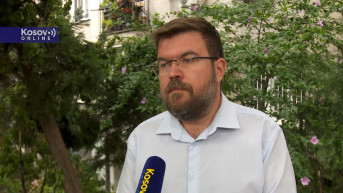
Analyst Predrag Rajic told Kosovo Online that he is certain Pristina will not accept the Serbian Orthodox Church (SOC) as a dialogue partner in discussions about resolving its legal status in Kosovo. However, he believes that representatives of the European Union and the United States are interested in speaking with the Church, adding that he places more faith in the US, especially under the current American administration, than in the EU.
“We see President Trump presenting himself as a defender of Christians around the world, while what Pristina is doing is a direct attack on Christian heritage,” Rajic said.
Because of that, he believes Serbia could find an appropriate partner, especially among American Christians active in US politics, for addressing the SOC’s position in Kosovo.
“The fact is that America currently has much more influence in church affairs in this context, and the new pope is American, meaning they are now far more influential even within the Roman Catholic Church than they used to be. We also see that President Trump is trying to maintain good relations and establish communication with him. In that context, I think we all need to work together, as a state, individuals, organizations, the diaspora, and the Church, to get Americans interested in this issue. I believe they would be willing to support the interests and legitimate rights of the Serbian Orthodox Church in Kosovo and Metohija,” Rajic said.
According to him, Pristina consistently denies the Serbian Orthodox Church the right to exist in Kosovo and Metohija and uses complete distortions and falsifications of history. He explains that their key narrative is that the churches and monasteries in Kosovo and Metohija are not Serbian heritage, but Byzantine, and therefore Greek, since the official language in Byzantium, or Romea, was Greek.
“They want to claim that what we see in Kosovo and Metohija is the work of Greek builders, a product of Greek culture, and therefore Greek Orthodoxy. What they actually aim to do is create a rift between Belgrade and Athens. They haven’t succeeded, but that’s their plan. It’s unrealistic to expect anyone to believe that Albanians built Gracanica or the Patriarchate of Pec, but they will try to say, ‘Look at the architectural style and who the craftsmen were,’ and point out that Serbs call Metohija by a Greek word metoh. This will be part of their attempt to push the narrative that Serbs appropriated what Greeks had created, that Byzantium built these structures, and Serbs later made minor changes and claimed them as their own, adopting symbols and religion from the Greeks, and eventually breaking away from the Greek Church. That is Kurti’s narrative, and we need to be very aware of it,” Rajic said.
Because of such a policy, Rajic believes Albin Kurti will not physically destroy Serbian monasteries and churches, which he says is “a small good in the midst of evil.”
“His strategy isn’t physical destruction, but political seizure, to try and take these holy sites from the Serbs and assign them to someone else. He will certainly try to do that in the future, and that is why he will never accept the Serbian Orthodox Church as a partner in dialogue,” Rajic emphasized.
At the same time, he added, work must be done with other Orthodox churches, like the Archdiocese of Athens and the Ecumenical Patriarchate in Constantinople, to prevent a future scenario where someone might claim that Kurti’s historical revisionism is actually legitimate.
“This is a very dangerous game, a long-term strategy. It may not seem as barbaric as the events of 2004 when churches and monasteries were destroyed, but it’s no less serious. Albanians now realize they can no longer do that—Europe and America wouldn’t approve. So if they can’t physically destroy the monasteries, their goal is to reassign them and eventually legitimize that narrative in the eyes of the international community,” he explained.
Rajic also warned of another potential threat to the SOC, a scenario similar to what occurred in Montenegro, where someone could form an NGO called the “Kosovo Orthodox Church” or something similar.
“Kurti would legitimize and recognize someone like that. They will accept the existence of Orthodoxy in Kosovo, but it must have no Serbian prefix or connection to Serbs. That is the core of their strategy. We will definitely face challenges in the future, but it’s good to be aware of their plan so we can act in time, especially toward those who will be targets of Albanian lobbying. I believe the Church is well aware of this and is already working on it. We have seen active ecclesiastical diplomacy, primarily from Serbian Patriarch Porfirije, who understands these issues very well and is not sitting idly by waiting for problems to arise; he is confronting them head-on. That is the only right approach,” Rajic concluded.


0 comments