
Rajic: Redistribution of Power in Africa - If France Withdraws, the US Could Fill the Void
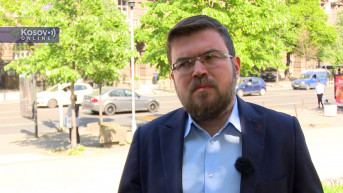
Predrag Rajic from the Center for Social Stability told Kosovo Online that over the past decade, there have been frequent shifts among some African countries regarding Kosovo, and such shifts are likely to continue in the future. However, Serbia has managed to convince a large number of countries from this continent to withdraw their recognition of Kosovo, and the battle continues. One of the African countries that recognizes Kosovo is Senegal, where a new president, Basiru Diomaje Faje, has come to power. Rajic states that Senegal will probably pursue a somewhat different foreign policy since they have announced that they will not rely solely on France, as has been the case so far, but will try to find partners in other parts of the world.
"However, it is important to bear in mind that France is deeply rooted there politically, economically, and culturally, and it happens in cycles that in West African countries there is a change of government and then a deviation from the main course is announced, but somehow a middle ground is found and the work with the country that has been present there for many years continues," Rajic explains.
Predrag Rajic adds that France has withdrawn from some countries where there were military coups, such as in Niger, while other states continued to de facto work with the new authorities.
"I would say that the void that could arise if France withdraws more or less, or is pushed out, can largely be filled by another Western country, and here I primarily mean America, which alone has the capacity to make its presence felt there. It is also a fact that Russia has had interests primarily in the security and military sphere, and China is present infrastructurally, but to be a dominant partner in a part of the world like West Africa, you need to have a unified political-diplomatic strength and economic-infrastructure presence and money, as well as a security presence. It is not easy to combine all these, as seen in the example of France, which has been there the longest," says Rajic.
He emphasizes that he believes there will be a redistribution of power, and that this can lead to an increased risk of armed conflict in African states, especially in the west, but he hopes that this will not happen again in the Francophone part of Africa. Senegal is, he points out, a good example that peaceful transfer of power can occur.
Regarding the stance of African countries towards Kosovo, Rajic notes that some countries have been known to recognize it, then de-recognize it, and almost change their stance two or four times over ten years.
"We need to work with them and see where we can align interests. We have shown, primarily thanks to the proactive policy of President Aleksandar Vucic over the past decade, that we know how and can compete in this field, even though we face the patrons of so-called Kosovo independence who are objectively more powerful than us in this arena, but we have managed to secure a large number of countries that have withdrawn their recognition. We will fight to ensure that countries that have not recognized Kosovo do not do so, and those that have recognized it to de-recognize it. It will be a long battle using political and diplomatic means and this is an issue that will be on the agenda of Serbia's relations with African states for a long time," states Rajic.

comments