
Rakipi: The Hague verdict will not affect relations between Albania and Serbia, it will affect politics within Kosovo
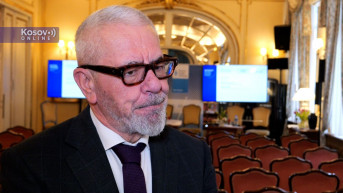
Albert Rakipi, President of the Albanian Institute for International Studies, believes that the verdict in the trial currently being conducted in The Hague against former KLA leaders, which is expected in the coming months, will not negatively affect relations between Albania and Serbia. That decision, he told Kosovo Online, will affect politics within Kosovo.
“I hope and believe that the decision will be in favor of Kosovo’s leadership, because at the beginning we saw accusations and an investigation into organ trafficking and other matters that were completely false. Of course, the decision in The Hague will affect politics within Kosovo. I think it will absolutely influence developments within Kosovo for some time. But I do not think the decision will affect relations between Albania and Serbia. Because Kosovo is a third country. For us,” Rakipi said.
On a scale from one to ten, Rakipi rates relations between Albania and Serbia as seven and says they are currently in a kind of status quo.
He adds that he usually gives the same grade to his students.
“Not to punish them, but to encourage them to improve. Because I think there is room for Albania and Serbia to develop relations, always avoiding debates and issues that are not part of those two countries,” he said.
Over the past decade, according to Rakipi, there have been activities on both sides, such as the momentum in 2014–2015 in developing relations based on the formula “we agree to disagree,” which was a pragmatic approach.
“And I, as well as others, truly believed that the leaderships of both countries would develop relations based on this approach. But unfortunately, we have seen that over the past ten years they have avoided this formula ‘we agree to disagree’, and instead applied a mediating and populist approach when it comes to a third country, which is Kosovo,” he said.
Rakipi recalls that in 2014, during a visit to Belgrade, Albanian Prime Minister Edi Rama spoke in one of his statements about what Serbia should do regarding Kosovo.
“That means that, completely contrary to the ‘we agree to disagree’ approach, he brought a third country into bilateral relations. For Albania, Kosovo is an independent country, for Serbia it is different. But based on the formula ‘we agree to disagree’, countries can build relations, economy, trade, investments,” Rakipi assessed.
He also considers it controversial that in 2015 Federica Mogherini, then Italy’s foreign minister, took the initiative to mediate between Albania and Serbia.
“There is no conflict between Albania and Serbia, no dispute over territory or anything else, because Kosovo is a third country. And my question at the time was, what is Italy mediating? And the third issue was again a later statement by Prime Minister Rama, when he said that Albania and Serbia could do what Germany and France did after World War II. This equation is completely wrong because there was no war between Albania and Serbia. While Germany and France fought for more than a century, that is not the case with Albania and Serbia. So the idea was that reconciliation between Albanians and Serbs in the Balkans depends on Albania and Serbia, which is not the case,” said the president of the Albanian Institute for International Studies.
He adds that a European perspective could help Serbia abandon what he calls “living in a lie” when it comes to Kosovo.
“You can manipulate public opinion, but reality is different. This is a third, independent country, and as soon as the state, society, and elites understand this reality, it will be good for all of us,” Rakipi concluded.


0 comments