
Petronijevic: No verdicts meeting international criminal law standards can be expected from the court in The Hague
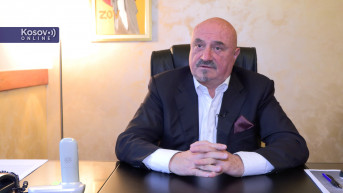
After four years of work by the Kosovo Specialist Chambers for war crimes, seated in The Hague, it is still not possible to determine with certainty the predominant reason for their establishment, nor to predict the scope of the results of their work, said Goran Petronijevic, President of the Center for the Renewal of International Law. He stated that no results can be expected from this “para-judicial institution” in the form of verdicts that would meet the standards of international criminal law.
It is a fact, Petronijevic told Politika, that over the four-year period there has been progress in negotiations between Belgrade and Pristina on resolving problems that arose as a result of what he described as the “unconstitutional secession of Kosovo and Metohija from the Republic of Serbia.”
“The so-called state of Kosovo was recognized by dozens of countries in a short period of time, which was part of the plan at that moment of the still-dominant global hegemon, the United States. The creation of ‘independent Kosovo’ was one of the programmatic demands of neoliberal globalism, which at that time held the United States ‘captive’ with all its capacities, with the aim of justifying the illegal and illegitimate aggression by part of NATO against the Federal Republic of Yugoslavia. In other words, the creation of ‘independent Kosovo’ was meant to show the whole world that the bombing of the FRY was justified. When the protagonists of the provisional Kosovo authorities realized that they would not be able to secure full recognition of Kosovo as an independent state, a kind of secret diplomacy was launched in which Hashim Thaçi, as the former head of the KLA, played one of the key roles,” Petronijevic said.
Realizing that this was the only way for “self-proclaimed Kosovo to survive in some limited form of sovereignty,” Thaçi, according to Petronijevic, was prepared to accept certain compromise solutions that were “emerging in those negotiations.”
He adds that the neoliberal globalist West saw this as a major threat to its own interests, which is why a plan was set in motion to criminally prosecute Thaçi and his associates for war crimes—crimes in whose commission, he claims, they had been supported by the West.
“Understanding that any compromise between Belgrade and Pristina would jeopardize their interests, the neoliberal globalist West, following the tried-and-tested ‘kill or capture’ model, proceeded to implement a justified prosecution of Thaçi and his associates for crimes committed within the so-called KLA. From this it follows that the real reason for the establishment of the Specialist Chambers for KLA war crimes, before which KLA members are being prosecuted so many years after the events, is in fact the threatened interests of the West. Thus, the motive was not a desire to respect international law, to adequately punish perpetrators, or to provide satisfaction to victims. Such intentions of the initiators and founders of the Specialist Chambers are also evident from the content of the indictments brought against the accused. One of the main objectives of all indictments is precisely the concealment of the real causes of the outbreak of the conflict in Kosovo and Metohija. From the indictments it can be seen that the role of the KLA in instigating the conflict through the permanent commission of terrorist acts in Kosovo and Metohija has been blurred and turned upside down,” Petronijevic believes.
Instead of being portrayed as a terrorist organization whose aim was to provoke armed conflict in Kosovo and Metohija in order to create an alibi for NATO’s military intervention against the FRY, the KLA, according to Petronijevic, has been given the aura of a “liberation organization” tasked with protecting the “endangered” Albanian population from the “evil” Serbs.
Such a narrative, the lawyer adds, is evident from the prosecution’s filings, in which, he says, it can only vaguely be discerned that serious crimes against Serbian, Albanian, and non-Albanian civilians were primarily ethnically motivated.
By shielding the KLA and justifying its activities, the West is in fact justifying its own participation in crimes, Petronijevic argues.
“This intention of the West is most visible in the conduct and substance of the testimonies of senior U.S. and NATO officials, who have one after another attempted to give these crimes an entirely different character. Christopher Hill, Wesley Clark, and others—who during the conflict held high positions in the U.S. administration and NATO—by testifying before the Specialist Chambers were in fact presenting their own defense. There is no doubt about the dirty role played in the initial instigation of the conflict and the multidimensional support for the KLA, then a terrorist organization, by the former U.S. ambassador to Belgrade Christopher Hill and his then principal Richard Holbrooke. The old, well-rehearsed model of creating terrorist organizations worldwide—their training, arming, financing, and incitement to action—is clearly visible in the case of the so-called KLA. Through this model, the neoliberal globalist West pursued its goals around the world, ‘supporting peace’ in every part of the globe that it had previously declared its sphere of interest. In the specific case, NATO and the KLA in 1999 were more than allies. NATO waged war against the FRY, while the KLA was its infantry on the ground, fully controlled and coordinated by NATO command. Bearing this in mind, it can be unequivocally asserted that the U.S. administration of the time and NATO command were co-perpetrators of KLA crimes in Kosovo and Metohija. In that light, the testimonies of their officials before the Chambers in The Hague should be viewed,” Petronijevic said.
Asked what can be expected at the conclusion of the judicial proceedings, Petronijevic replied that, given the goals behind the establishment and operation of this, as he calls it, “para-judicial institution,” no outcomes can be expected in the form of verdicts that would meet international criminal law standards regarding the mandatory punishment of war crimes, their perpetrators and instigators, and adequate satisfaction for victims.
“A particular problem will be, whatever the verdicts may be, the attempt to rewrite the factual situation as it was on the ground, with those distortions—an adjusted ‘truth’—meant to become the historical narrative. Since the change in the U.S. administration, a much softer stance toward the accused has been visible, as well as efforts to ease their position. The reason lies in the U.S. administration’s inability to fully control Albin Kurti, his servility toward the European wing of the neoliberals, and expectations regarding specific conduct by Thaçi and his associates in protecting U.S. interests,” Petronijevic is convinced.
The establishment of the Specialist Chambers and the start of their work, this lawyer believes, was and remains a stumbling block among Albanian political actors in Kosovo.
He notes that from the very beginning it was clear that the “disobedient” Thaçi and others were replaced by the extremist Kurti, who, on the other hand, he says, albeit covertly, is fully servile to Western interests.
The policy pursued by Kurti, Petronijevic adds—consisting of neglecting the interests of Albanians themselves, harsh persecution of Serbs and non-Albanians, and an exclusive focus on protecting the interests of, in this case, London and Brussels—largely originated in those centers and was implemented from there.
“It is no secret that Kurti himself, by seeking the support of Brussels and London, greatly contributed to the current status of Thaçi and his followers. Like any para-judicial institution whose purpose is political rather than legal, the Kosovo Specialist Chambers seated in The Hague will, with the gradual loss of political interest by their patrons in its work, eventually wither away like the International Criminal Tribunal for the former Yugoslavia, i.e., the Hague Tribunal,” Petronijevic concluded.

0 comments