
Rakocevic: The crackdown on the Serbian language has lasted for 25 years, Kurti’s statement is the peak of discrimination
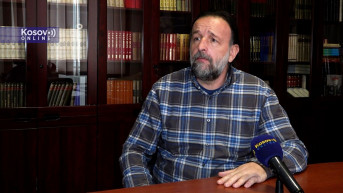
President of the Journalists’ Association of Serbia (UNS) Zivojin Rakocevic told Kosovo Online that the call by caretaker Prime Minister Albin Kurti for journalists from Serbian-language newsrooms to ask questions in Albanian represents the peak of decades-long institutional discrimination against the Serbian language.
“There is a small number of those unfortunate laws here in Pristina that Albin Kurti has not violated. He has violated everything that could be violated and now, here he is, he has come to the language as well. He has come to what is one of the constitutive elements that both foreigners and Serbs cling to, and that entire system which says that the Serbian language is equal to Albanian and that these are two official languages in official use. What he said is an announcement of a crackdown on the Serbian language from that level,” Rakocevic said.
He added that the crackdown on the Serbian language has been going on for 25 years.
“From the police and the judiciary, through poor translations, signs, and discrimination in any job when language is concerned, in fact, Albin Kurti has shaped all forms of discrimination when he said: ‘Sorry, you can also ask questions in Albanian,’” the UNS president said, reacting unequivocally to Kurti’s message.
“No, if he does not know the Serbian language, he is obliged to have an interpreter. No, if a police officer does not know the Serbian language, he is obliged to find a police officer who does. No, if someone in any institution, whether in a municipality or the power distribution company, does not know Serbian, they are obliged to find someone who does. It does not matter at all whether you know Albanian or not. What matters is that the system recognizes those who want to receive services in their mother tongue,” he stressed.
Rakocevic is explicit that language cannot be imposed by force.
“The mother tongue is something sacred, something that no one can impose on you. There are legal rules and they must be respected. Everything beyond that is discrimination. A language cannot be learned by force. Languages are not a matter of coercion, but of relationships, affection, trust, and communication. Do I want to read a great writer in Albanian? Yes! But do I want to learn Albanian because Kurti, a police officer, a judge, or a clerk demands it? No. I will never learn a language if someone forces me to,” he said.
He states that Albin Kurti’s statement is the crown of discrimination and a projection of a system that is disturbed by language.
“That system is legally regulated and the language must be equal, but since everything is being torn down, why not abolish that language as well? Whether he speaks Serbian does not interest me at all, nor should it interest journalists. What interests us is whether he violates the law with such statements – and he does. Does he discriminate against someone? Yes, he discriminates. It is hard to find a law that this system and this government have not violated,” Rakocevic said.
He emphasizes that the Journalists’ Association of Serbia insists on linguistic sensitivity.
“These are terrible messages. We know how we have fared over the past 25 years because of the use of our mother tongue, we have developed a reflex in its use. Eighty percent of Serbs in Kosovo, when they head to areas where Albanians live, think: ‘Should I use my mother tongue and will someone react to my Serbian language?’ And then we come to institutions and get the answer: ‘Well, learn Albanian.’ What kind of message is that for journalists and for ordinary people? It is a violation of the law, but it is hard to find a law that this system and this government have not violated,” Rakocevic concluded.



0 comments