
Rakovic: With the attacks on the SOC, Pristina aims to expel Serbs; international community part of the problem
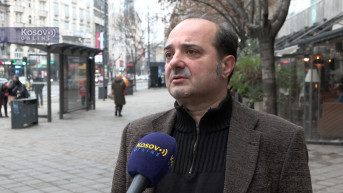
Historian Aleksandar Rakovic tells Kosovo Online that Pristina’s attacks on the Serbian Orthodox Church (SOC), as the cornerstone of the Serbian people, are part of a strategy to achieve its plan for an ethnically pure Kosovo. He also assesses that the international community is part of the problem rather than the solution.
Some Albanian politicians have once again publicly accused the SOC of being the main organizer of violence against Albanians and of hiding weapons in churches. Rakovic believes the purpose of these accusations is to maintain constant pressure on the Serbian people and the Serbian Orthodox Church.
“They will not stop because this is a way to pressure Serbs to leave, to make their lives insecure. The Serbian Orthodox Church remains the cornerstone of the Serbian community in Kosovo and Metohija. Such unbearable living conditions, according to Albanian thinking, should push Serbs to leave Kosovo and Metohija as quickly as possible, so that it basically turns into an ethnically pure Albanian territory,” he said.
Rakovic says that the SOC, along with the Serbian people, must remain patient and wait for a potentially better opportunity that could happen with the return of Donald Trump to power.
He notes that Europe has the capacity to do much to stop these attacks, but that the question is whether it is willing to do so.
“The international community is fundamentally part of the problem. They bombed our country and occupied Kosovo and Metohija. Their ongoing goal is to ensure that the Serbian people never find peace and that Serbian statehood is never fully restored in Kosovo and Metohija. Their aim is clear. Our goal, however, is to wait for a new geopolitical shift, which we hope will come with Trump, and to address our national issues within that context,” the historian explained.
Rakovic says that Kosovo is the "Jerusalem question of Europe," for which no quick resolution exists.
“The Jerusalem issue remains unresolved to this day, persisting for over 2,000 years, or even longer if we consider the ancient period. As for the Kosovo issue, if we date it back to 1389, it too remains unresolved. There are no quick fixes, Gordian knots to cut here, or similar. We must patiently wait for a better opportunity while learning from the experiences of others in the Middle East about what to do and what to avoid,” Rakovic concluded.



0 comments