
Jovanovic: Pristina is trying to portray the SOC as a terrorist organization to seize its land

By attempting to label the Serbian Orthodox Church (SOC) as a terrorist organization, Pristina aims to implement a campaign to appropriate monastic property and provoke clashes with Serbia and the Serbian people in Kosovo, historian Luka Jovanovic told Kosovo Online.
The Eparchy of Raska and Prizren issued a statement expressing great concern over irresponsible and false claims made by certain public figures in Kosovo's Albanian community, alleging that the Serbian Orthodox Church was the main organizer of violence against Albanians and that weapons are being hidden in churches.
Jovanovic observes that since Albin Kurti came to power, alongside pressures on the Serbian people, an aggressive campaign has been waged against the Serbian Orthodox Church in Kosovo, particularly targeting the Eparchy of Raska and Prizren.
"Pristina has attempted in various ways to challenge the presence of the SOC in Kosovo and Metohija, to seize its cultural landmarks and religious sites. This broader action against the Serbs in Kosovo and Metohija is paralleled by actions targeting the SOC," the historian said.
He notes that Pristina has demonstrated its intentions on several occasions, though the international community has prevented their full implementation.
He also reminds of the emergence of so-called "pseudo-priests" in many rural churches – Albanians from Albania – who aim to present the narrative that an Albanian Orthodox community exists in Kosovo that does not recognize the SOC and demands its own distinct identity.
Jovanovic asserts that lacking their own religious sites, these groups intend to take over those of the Serbian Orthodox Church.
"The only way to remove the SOC from Kosovo and Metohija is to portray it as a terrorist organization – as one promoting rebellion and disobedience toward the central authorities in Pristina as well as the international community. This is part of a broader campaign to depict the entire Serbian people and political leaders in Kosovo as terrorist leaders, and the church as a mechanism funding such extremist endeavors," Jovanovic explained.
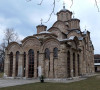
He adds that Pristina seeks to portray the SOC as belligerent and terrorist to claim monastic and church land, citing the case of the Visoki Decani Monastery as evidence.
"Visoki Decani has only been granted 20 hectares, despite having the right to reclaim several hundred hectares of land, both around the monastery and throughout Kosovo," he said.
Jovanovic warns that it must not be forgotten that Visoki Decani is not the only Serbian monastery that held vast estates until 1945–1946, and many other churches and monasteries are entitled to significant land restitution in Kosovo.
"We have seen an aggressive campaign over just 20 hectares for Visoki Decani. Imagine the kind of extreme campaigns that would arise if the issue of every monastic forest, field, and property were addressed. It must be remembered that a large number of Serbs, historically and currently, have donated their properties to the SOC, much of which was confiscated in 1945. Since then – neither in 1999, 2004, 2008, nor to this day – has that land been returned to the monasteries. This is part of a much larger narrative involving monastic wealth, land, and conflict with Serbia and the Serbian people in Kosovo and Metohija," Jovanovic stated.
He emphasizes that the SOC’s only protector, and by extension the Serbian people in Kosovo, can be the international community, which has repeatedly committed to such obligations through international agreements.
According to him, international representatives, especially KFOR forces, maintain active contacts with abbots of many monasteries as well as with Bishop Teodosije of the Eparchy of Raska and Prizren.
"This offers hope. I always like to highlight the positive role of the Italian KFOR contingent, which has often defended Serbian holy sites, particularly the Visoki Decani Monastery, which remains under threat according to all reports by international organizations," the historian said.
He clarifies that KFOR cannot act preventively but, as expected of a military force, can only intervene when a site is in immediate danger.
"Unfortunately, everything seems to be heading in that direction, and I believe the international community must be ready to act at any moment to protect SOC sites, clergy, monks, nuns, and all other members of the Eparchy of Raska and Prizren," Jovanovic concluded.

0 comments