
Rapajic: The question for the Constitutional Court should be whether the majority can decide who is nominated for deputy speaker of parliament
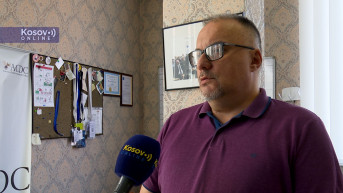
Aleksandar Rapajic, program director of the NGO Center for Advocacy of Democratic Culture from North Mitrovica, believes that the main question that should be put to the Constitutional Court at this point is whether the majority in the Assembly can decide who will be nominated as deputy speaker of parliament by a party that has the right to nominate a candidate.
"If a particular political party has the right to nominate a candidate, another party cannot prevent that candidate from being nominated," Rapajic told Kosovo Online, adding that he believes it would have been a better option for all deputy speakers to have been voted on as a package, in a single vote, which was essentially the Constitutional Court's previous recommendation.
He said that Self-Determination had once again engaged in a kind of game over the constitution of the Assembly.
"In a way, they complied with the previous decision of the Constitutional Court, but in another way they circumvented it somewhat, because the previous decision of the Constitutional Court, which was issued after Rasics was elected deputy speaker in the previous term of the Assembly, stated that, specifically for the Serbian community, the party that won the majority of votes within the Serbian community should nominate the candidate. We saw that the parliamentary majority did not want to elect the first candidate, but only the ninth candidate nominated by the Serb List, which in a way mocks that decision of the Constitutional Court, which clearly stated that the nomination should come from the majority within the Serbian community," Rapajic assessed.
As he added, they tried to do the same with the PDK and decide who would be deputy speaker of the Assembly from the PDK. The PDK responded by refusing to nominate another candidate and even refusing to renominate Vlora Citaku, and will now turn to the Constitutional Court for an opinion.
Although a deputy speaker of the Assembly from the PDK was not elected, Rapajic said that the Assembly was nevertheless constituted in accordance with the previous decision of the Constitutional Court, because it contains a paragraph stipulating that a political party cannot block the constitution of the Assembly by refusing to nominate a candidate.
"In that case, the seat is left vacant and the Assembly is considered constituted. Therefore, it is possible for the session to continue, but it is obvious that Self-Determination essentially does not want to form institutions, but is merely postponing matters, most likely trying to hold elections sometime around the New Year, when it is counting on diaspora votes," he said.


0 comments