
Raseta: If Kosovo reaches an agreement with the US on accepting migrants, it could gain financial or political benefits

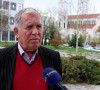
If the US administration and Pristina reach an agreement on accepting migrants deported from the US, according to Dragoslav Raseta from the organization New Third Way, Kosovo could benefit financially or expect certain political advantages.
"Given that Kosovo has traditionally been closer to Democratic rather than Republican US administrations, this issue could be used to seek a balance and to re-establish strong ties between Washington and Pristina," Raseta told Kosovo Online.
If Kosovo were to receive financial compensation, he says, it would be similar to the agreement Kosovo has with Denmark regarding the housing of Danish prisoners on Kosovo’s territory, from which Kosovo will earn around 210 million euros over ten years.
Raseta says that the US has sent proposals regarding the acceptance of migrants to countries in the Western Balkans, the Middle East, and North Africa. Among those countries, in addition to Kosovo, are North Macedonia, Albania, Libya, Eswatini, and others.
He adds that such arrangements are not unusual for the US administration, given that a similar format was used during the US withdrawal from Afghanistan, when efforts were made to find refuge for as many Afghan refugees as possible who had cooperated with the Kabul authorities and the US administration.
What happens to migrants after they land in the country to which they have been deported is, in Raseta’s assessment, a very complex issue.
“We see that there are certain problems with US deportation policies. We are aware of the case of a man who ended up in prison in El Salvador through no fault of his own. He had no criminal record and had all legal documentation for remaining in the US. So there are various issues that place pressure on the judicial systems of countries that accept such migrants. These countries take on the responsibility of integrating them into their societies, usually by distributing them across several cities. But NGOs and human rights organizations often emphasize that violations of basic human rights frequently occur when it comes to migrants,” he notes.
In some cases, he points out, deported individuals are allowed to return to their country of origin after spending a certain period in the country that signed the agreement with the US.
“This usually concerns poor groups who lack proper documentation and have no means to return to their homeland, or come from countries affected by war or extreme poverty, so returning is often unrealistic. Generally, the US tries to ensure they stay for a period of one to two years in the territories of the countries with which agreements have been signed, in order to maintain appearances and allow them to go through the judicial and internal systems of that country, so they are not completely erased or forgotten,” Raseta says.
If an agreement between Kosovo and the US is reached, Raseta does not believe that a large number of deportees will remain in Kosovo in the long run. If they get a chance to move to some Western European countries, he believes, it will be difficult to keep them in Kosovo. However, he reiterates that these are usually impoverished families who neither have the means nor the resources to survive in a Western European country or to return to their homeland.


0 comments