
Kovacevic: Money is no guarantee of proper care for deported migrants
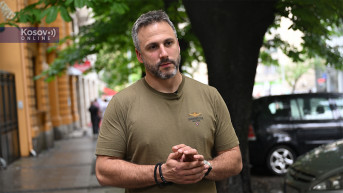
Human rights lawyer from Belgrade, Nikola Kovacevic, says he sees no interest other than financial gain that would lead any entity, including Kosovo, to sign an agreement with the United States on taking in migrants deported from the US.
According to reports in American media, the administration of President Donald Trump is in the process of reaching agreements with several countries on accepting deported migrants. Among those mentioned as potential recipients are Libya, Rwanda, Benin, Moldova, Mongolia, and Kosovo, even though the deported individuals may not necessarily be citizens of those countries.
“These countries are doing it for money or some form of geopolitical exchange, but what’s certain is that none of the listed countries has the capacity to independently, without agreements with the US, the UK, or anyone else, care for refugees, asylum seekers, and migrants. So the question arises, why would they be expected to do it better based on an agreement with another state, on behalf of that state, when they themselves are not able to do it, even though it is their obligation under international law? That is the most controversial issue here. These are countries that, in general, do not have the capacity to uphold a high level of human rights, so how can we expect them to do so just for money? Money is not a guarantee,” Kovacevic told Kosovo Online.
He adds that the mentioned countries are likely among the top 50 in terms of corruption rates.
Speaking about the criteria the US uses to decide with whom to sign such agreements, Kovacevic says it is hard to say, but he assumes research would show that the countries mentioned by US media are less developed, face rule-of-law crises, and lack stable institutions.
“These are countries where such ‘dirty deals’ can probably be made, where, for some money, they might offer housing for these people. However, such external agreements have never succeeded anywhere so far, and I hope they won’t now either. But if they do, I am convinced it will very quickly become clear that outsourcing this problem to the external borders of more developed parts of the world always turns into a ‘graveyard of human rights,’” he states.
The best examples, he emphasizes, are the camps in Lesbos, Kos, and Samos, which were created to detain people coming from Turkey to the external borders of the European Union. According to him, the European Court of Human Rights condemns Greece almost weekly because these people are kept in overcrowded, unhygienic, and unsafe conditions,among them children and other vulnerable groups.
This policy, he says, is yet another example of how major imperial powers experiencing high numbers of refugee and migrant arrivals attempt to score political points through anti-immigration narratives, as helping people who have fled their countries for various reasons is no longer a priority in today’s world.
“America has already started implementing this policy in relation to El Salvador, and the mention of these current countries under discussion only shows how popular it has become to externalize the migration issue. It's not just America, this includes the European Union, the United Kingdom, and some Scandinavian countries,” Kovacevic says.
He explains that the future of deported migrants sent to third countries depends on the specific agreements reached.
“In Rwanda, for example, the agreement was that people would go there and have their asylum procedures conducted there, living in a camp as asylum seekers. Albania gave part of its territory to the Italians for detention purposes. The models vary, and we need to look at the content of the agreements to understand what exactly might happen,” the lawyer emphasizes.



0 comments