
Samardzic on negotiations with Ahtisaari: He was inclined towards the Albanians
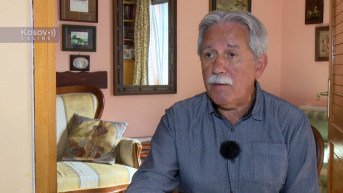
Former Special Envoy of the UN Secretary-General for negotiations on the status of Kosovo, Martti Ahtisaari, as assessed by Slobodan Samardzic, former Minister for Kosovo and Metohija, had not been inclined towards mediation because he, as pointed out, had had biases and favored one side - the Albanians.
"It would be best to forget about him", Samardzic said, reminiscing about working with the now-deceased former President of Finland and Nobel Peace Prize laureate.
Samardzic, who was a part of the Serbian negotiating team in the talks on the future status of Kosovo held in 2006, notes that Martti Ahtisaari was chosen as the Special Representative of the UN Secretary-General, and the negotiations took place within the framework of the UN, as this organization had adopted a legally binding document - Resolution 1244.
"This was supposed to be the framework for these talks. We conducted the negotiations under his leadership in 2006, and somewhere near the end, he tried to forcibly terminate the negotiations, which did not succeed, as the five major powers, including Russia, insisted on continuing the talks, which were resumed in 2007 in the arrangement of the “troika“. Ahtisaari was no longer involved. They simply replaced him with another format because they saw that he had no luck," Samardzic, a Professor at the Faculty of Political Sciences says.
He describes Ahtisaari as biased, and his position was to compel the Serbian delegation to accept the plan he had drafted, which implied supervised independence for Kosovo.
"We were somewhat forced to negotiate, but given that we saw that the plan was of no use to us and that it was quite the opposite, as it implied that Serbia would recognize the temporary status - supervised independence, we agreed to the talks with the position of doing our utmost to prevent that proposal from being accepted," he explained.
He adds that this was done in a specific manner, introducing 550 amendments into Martti Ahtisaari's text, which was designed to be corrigible to amendments. As Samardzic states, they "changed its essence".
"He was well aware that this was our position and tactic. He got very nervous and expressed overconfidence and an arrogant attitude. According to his behavior, the talks could have easily been terminated. Fortunately, the UN Secretary-General had a Deputy Special Representative, the Austrian diplomat Albert Rohan, who had much more tact, and thanks to him, the talks somehow continued," he says.
During the negotiations, as Samardzic says, the Albanians were present and acted comfortably because they knew it was a staged event, and that it would conclude with Serbia recognizing an independent Kosovo, which, nevertheless, did not happen.
"Ahtisaari was not a mediator; he was very biased towards one side," Samardzic emphasizes.
Samardzic notes that the Serbian Parliament rejected that plan and at the beginning of 2006, it allowed participation in the talks and accepted the negotiating team's platform.
He adds that they continuously presented reports to the Assembly, after each stage of the talks, and in the end, they proposed that the plan be rejected, which was accepted by the Prime Minister, the President, and the Assembly.
"He was very nervous about it. He experienced a complete failure, so in September 2006, he directly told a member of our negotiating team, the late Dusan Batakovic, that the Serbs were guilty as a nation. Others nearby heard this; we initiated a process to hold him accountable; we did enough that he did not receive the Nobel Peace Prize that year, but he got it the next year. The Nobel Committee operates under the baton of the State Department, but at least they postponed it because 'a scandal broke', and a significant portion of the international community saw what kind of a person they were dealing with," Samardzic said.
He states that Ahtisaari was entirely unsuccessful, which is why the 'troika' was formed, a completely different format of negotiations, with representatives of Russia, the EU, and the US at the helm.
These talks proceeded much better and more successfully from a formal standpoint, Samardzic says, adding that they were abruptly terminated in December 2007 because Western actors no longer had the patience for it.
"Our policy was not to avoid talks but to try to do something, believing it's better to negotiate than go into conflict. They actually turned the whole situation into a conflict, which happened through the unilateral declaration of Kosovo's independence in February 2008. Martti Ahtisaari had a dishonorable role there, I can say that because I was often with him. He showed ill will, although he acted in some situations," he noted.
Samardzic points out that the Serbian negotiating team was composed of experts in various fields, just like Ahtisaari's team, and that negotiations between the teams worked well. He concludes that Ahtisaari "firmly represented the most drastic faction in the State Department or the Pentagon, where that policy was formulated, and he played his role dishonestly to the end".
0 comments