
Spahiu: Both Serbia and Kosovo should be thankful to Ahtisaari
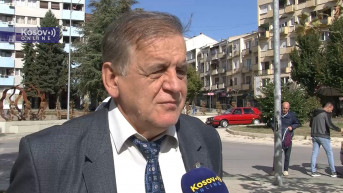
A university Professor from Pristina, Nexhmedin Spahiu, stated regarding the death of former Finnish president and former UN envoy for Kosovo Martti Ahtisaari that "both Serbia and Kosovo should be thankful to him".
"Serbia should be grateful to Ahtisaari because, without him, there would have been more bombings and more casualties. Kosovo should be thankful to him because he managed to find a formula for building it as a state while also satisfying the minorities living there, including the Serbs. Ahtisaari faced criticism from both sides, from the Serbs and the Albanians, as both wanted more, often at the expense of the other side. Nevertheless, he found the best solution," Spahiu states for Kosovo Online.
According to Spahiu, the essence of Ahtisaari's plan is to satisfy the minorities in Kosovo, especially the autonomy of the Serbs in areas of culture, health, and education, achieved through decentralization and the creation of new municipalities.
"Ahtisaari's plan left the possibility for minorities to be protected and have a significant opportunity for integration into Kosovo society, which is actually an interesting formula. What makes Ahtisaari's plan and the state of Kosovo a sui generis case is the position of the Serbs. Through his plan, the Serbs in Kosovo remain an integral part of the Serbian nation, maintain Serbian citizenship, and, on the other hand, they enjoy full autonomy and the status of a minority in Kosovo, which is not the case, for example, with the Serbs living in Romania, who are a minority there and have rights but are not an integral part of the Serbian nation," he believes.
Spahiu emphasizes that Martti Ahtisaari played a significant role in the declaration of Kosovo's independence.
"It has been shown how challenging it is to create a state in the modern era, and in the 21st century, in the case of Catalonia, which is much larger and more developed than Kosovo, it still failed to find a path to independence. So, for a small country and territory with just under two million inhabitants, finding a formula for independence and a position in the international system is indeed a significant contribution," he said.
Speaking about the elements of Ahtisaari's plan that are incorporated into the Constitution of Kosovo and Kosovo's laws, Spahiu states that the plan by the Finnish diplomat has the status of being "above" Kosovo's constitution. He emphasizes that if there is a provision in the Kosovo Constitution that contradicts Ahtisaari's plan, the plan takes precedence over the Constitution.
"Now, how the laws are applied in Kosovo is another question. Ahtisaari's plan, in general terms, has been applied, as municipalities with a Serb majority have been created, the Serbian language is the official language throughout Kosovo, there is a protective zone around churches and monasteries, autonomy in the fields of healthcare and culture. The reason why Ahtisaari's plan is not fully respected is that we are not a people who fully comply with the laws," Spahiu concluded.

0 comments