
Schmidt: If the West neglects the Balkans, Russia will take advantage of it
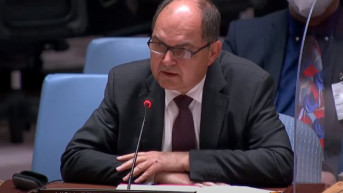
The High Representative of the International Community in Bosnia and Herzegovina, Christian Schmidt, does not see a significant risk of war breaking out between Serbia and Kosovo and believes that the current crisis resembles more of a political showdown in which, unfortunately, people have died.
Schmidt, in an interview with the German T-Online, added that this aligned with Vladimir Putin's plan, and the West should be cautious due to current issues and crises.
"This aligns with Putin's plan, so we should always be cautious with current issues and crises. However, I currently do not see a significant danger of war between Serbia and Kosovo. NATO has about 5,000 soldiers in Kosovo with a mandate to prevent possible escalation. The current crisis looks more like a political showdown in which, unfortunately, people have died," he explained.
When asked about Serbia's role in the events in Banjska, Schmidt said it was challenging to speak about it because it was currently unclear what exactly had happened.
"There's a lot of speculation, but our experience in the Western Balkans shows that it's highly unlikely that no one anywhere has any idea about what's happening. Instead, there are often many sides in the Balkans involved in such incidents," he pointed out.
He said that there had been incidents a few months ago with barricades in northern Kosovo and that there had been ups and downs in the conflict, but now that people had died, it made this escalation particularly bad and dramatic.
He criticized Serbia and Republika Srpska for declaring a Day of Mourning for the Serbs killed in Banjska, considering it cynical.
He is convinced that this event does not represent the end of the political process of rapprochement, but he added that the situation was dangerous.
Schmidt emphasized that Serbia was aware that its close relationship with the EU, its most important trading partner, was of existential importance.
"Due to its geographical location, Serbia cannot strategically afford to break ties with the West. Despite this, a policy of balancing between the West and Russia is possible. But the EU and the US have an influence on the Serbian Government if they act strongly and decisively," he noted.
Regarding the personal relationship between Putin and Serbian President Vucic, Schmidt said he didn’t know it but said that Serbia had voted with the West against Russia in the UN concerning the aggression in Ukraine.
"That was certainly a blow to Putin. I wouldn't, therefore, say that Vucic is unconditionally on Moscow's side on all issues. However, if the West neglects the Western Balkans, Russia will benefit. That's the danger," he warned.
He believes that the West must remain cautious and added that restraint was sometimes wrongly interpreted as weakness in the Balkans.
"In such a situation, it's important to act decisively. The West should insist on investigating the current situation on both sides. It must be made clear that Serbia cannot celebrate attackers. This can't happen if you feel committed to European values," Schmidt stressed.
He pointed out that, which was hard to imagine in the West, there was opposition in Belgrade that was more nationalist than the Government.
"How Vucic deals with that will be crucial," the German diplomat said.
Regarding Serbia's support for Milorad Dodik, Schmidt stated that Serbia never questioned the territorial integrity of Bosnia and Herzegovina.
"It's unclear to what extent Dodik actually receives support from Belgrade. For example, he wanted to arrest and deport me and didn't receive any obvious support from Serbia for that. Furthermore, Serbia never questions the territorial integrity of Bosnia and Herzegovina. I see a greater danger in the fact that Dodik's supporters are in Moscow rather than Belgrade. Currently, I don't see a common strategy between Dodik and the Serbian leadership," he explained.
When asked if he understood the concern of Kosovo's Prime Minister Albin Kurti that Kosovo's autonomous areas dominated by Serbs could be destabilized in a similar way to Republika Srpska in Bosnia and Herzegovina, Schmidt emphasized that the situation in Kosovo was legally different.
"There are still many countries that do not recognize it. Bosnia and Herzegovina has a clear international status, and the situation has long been resolved, even if there are always disagreements. On the other hand, in Kosovo, we have an agreement from 2011 for a certain level of municipal independence for four Serb-dominated communities north of Mitrovica. This agreement was never implemented," he pointed out.
Schmidt said that Serbia recognized the existence of Bosnia and Herzegovina but not Kosovo.
"Additionally, Kosovo is much smaller, and the autonomy of Serb municipalities is limited to the level of local communities. I don't see a significant potential problem for Kosovo's overall territorial integrity," he added.
Schmidt believes that it's not enough when the EU primarily focuses on the region when things become dangerous.
"In the West, there are many ideas about what can be done, but there are not enough pragmatic actions. EU membership is a significant goal for many Balkan countries, but the path to it doesn't go from zero to 100. It must be done step by step, especially concerning Kosovo. This state is not even recognized by all European states. Therefore, you must seek pragmatic solutions, and we can increase creativity a little," he explained.
He stressed that in any case, redrawing borders, which had been considered by former US President Donald Trump, would not help.
"That wouldn't lead to pacification of the region—quite the opposite. In all regions, there are ethnic majorities and minorities, so peaceful multi-ethnic coexistence is essential. There are countries where this already works well, for example, in Bosnia and Herzegovina. There's an approach here to systematically prevent serious conflicts, where coexistence, non-discrimination, and individual rights are often negotiated at the municipal level. This has provided a certain degree of stability, although there is still work to be done. Otherwise, I wouldn't be here," he concluded.


0 comments