
Simic: The attempt to evict the building in Bosniak Mahala is a part of the plan to expel the Serbs

Director of the Pension and Disability Insurance Fund Directorate in North Mitrovica and Vice President of the Serb List, Igor Simic, said that the attempts of the Kosovo authorities to evict Serbian institutions from the building in Bosniak Mahala in North Mitrovica were aimed at expelling everything Serbian from Kosovo and Metohija.
"It is a part of the expulsion of the Serbs and Serbia from Kosovo and Metohija, and I expect a great involvement of the international community because they must not allow additional escalation on the ground. Tensions have been high in recent months and KFOR should help prevent what none of us would want," Simic said for Tanjug.
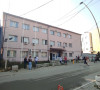
He reminded that this morning at around 9:15 a.m. the Kosovo Police had entered the building where the Office for Kosovo and Metohija, the Provincial Service of the Pension and Disability Insurance Fund, as well as the Kosovska Mitrovica administrative district are located, and pointed out that the premises and employees of those institutions had visited various units of the Kosovo Police and that under the pretext that they had a tip about an explosive device.
"This obvious game was aimed at forcing all of us who work here to leave the premises and help them occupy this building. We rejected the ultimatum of Pristina, and we believe that this issue must be resolved through dialogue and the formation of the Community of Serb-majority Municipalities as agreed in 2013 and 2015," Simic said.
According to his words, this morning he also told the police officers who, as he pointed out, had entered the building without any warrant.
Simic adds that they counted how many women and how many men there were.
"We are on our land and we will stay here, the law is on our side. Forty people work here, and forty families feed themselves from working here," he pointed out.
He emphasizes that the Kosovo Police have left for now and that the employees are at their workplaces.
"I cannot predict what will happen in the coming hours and days," he said.
He points out that the eviction of that building is a part of a wider plan to expel the Serbs and everything Serbian from Kosovo, and points out that there would be great social chaos, not only for the Serbs but also for the Albanians and others who depend on those institutions if the work of the institutions located in that building was prevented.
In this sense, he says, one can only imagine the chaos if 28,000 people were left without a pension, if the payment of assistance to the socially disadvantaged was prevented.
"It is a direct pressure on the Serbs, and on the other hand, an attempt to cancel the financial support from Belgrade for them to stay here and survive and feed their children," Simic points out.
He reminds that those institutions have been in that building for more than two decades.
Asked if they had a legal basis to evict them, Simic said that there was absolutely no right.
"This attempted emigration shows that in Kosovo and Metohija the right of the stronger is currently in force and the right of some to mistreat the Serbs is stronger than legal acts. This story about the need of the Kosovo institutions to suppress everything that is Serbian is reflected in the last four, or five months, and continues with this building. The first time they came, they had a list on which were all public institutions - health centers, hospitals, faculties, which provide services to the Serbs, but also to others in Kosovo and Metohija," the Vice-President of the Serb List says.
As he says, they are left to believe that written agreements must be implemented and that the Serbs have their rights and are protected.
When asked how dangerous it was that the building was located in a multi-ethnic environment, Simic said that so far they had not had any problems and that the Albanians who were in the immediate vicinity of the building had not wanted to get involved in everything that was happening and that they had heard unofficially that they considered that it was political pressure on the Serbs.
Answering the question of whether he would be at his workplace tomorrow, given that the deadline set by the Pristina authorities for moving out of the building expired tomorrow, Simic said that he and his colleagues would be at their workplaces.
As he says, the local self-government that was elected in the April elections, in which a little more than three percent of the citizens participated, and which were boycotted by the Serbs, made decisions to the detriment of the Serbs on several occasions.
In this sense, he recalls that they wanted to open a bridge on the Ibar, to seize the land from Serbian businessmen...
"That did not materialize it and I believe that it is because of our state leadership that urged the international community to prevent the mistreatment of the Serbs in Kosovo and Metohija. Since 1999, we have been forced to talk to international representatives and ask for their help. Certain parts of the international community are involved in our problems, but their results are limited. It is incredible that Kurti is so powerful that he can limit KFOR, the EU, and the Quint..." Simic points out.
As he says, the employees in that building are committed to peace, they want to preserve the peace and safety of all people, but in this, they must have the support of the international community, whose silence and diplomatic speech are barely audible.
When asked about expectations regarding the high-level meeting in Brussels as a part of the dialogue between Belgrade and Pristina scheduled for September 14, the Vice-President of the Serb List reiterated the position of that party.
"We need dialogue; it is a way to resolve open issues. Anyone who is against dialogue is against the survival of the Serbs. On the other hand, we have no expectations because it is more than obvious that the Kurti and the Osmani do not want dialogue. They want to solve problems by force, to expel the Serbs; they don't want to talk to Belgrade about the problems, but they believe that where there are no Serbs, there are no problems. The international community must send a clear message to Pristina that it will not allow this”.

0 comments