
Growth Plan and Kosovo: No first payment without a new Assembly; dialogue under scrutiny for future payments
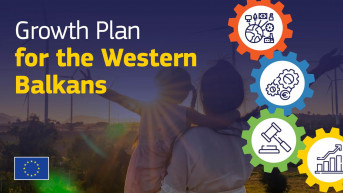
Despite the European Commission’s announcements last fall that the six Western Balkan countries could receive their first funds from the Growth Plan by the end of 2024, this has not happened. According to the latest information from Brussels, procedural steps are being finalized to allow the pre-financing amounts to be disbursed as soon as possible. However, in the case of Kosovo, no funds – including the initial advance of approximately €61 million – will be available until the parliament is constituted, as it must approve two agreements with the EU: one on the instrument and another on the loan.
Written by Dusica Radeka Djordjevic
Under the Growth Plan, the European Union has allocated €882.6 million for Kosovo, of which €253.3 million are grants and €629.3 million are long-term loans.
To initiate reforms, five beneficiaries of Growth Plan funds in the region have already been approved for an advance payment amounting to 7% of the total allocation, which for Kosovo is €61 million. So far, this portion has only not been approved for Bosnia and Herzegovina, as it has not received approval for its Reform Agenda.
The main condition for receiving funds is implementing reforms outlined in the Reform Agenda. Kosovo’s government adopted its agenda on October 9, 2024, which includes 111 reform steps to be completed by the end of 2027 across five key areas.
The first area is "Governance, public administration reform, and public finance management," the second - "Green and digital transition," the third - "Private sector development and business environment," the fourth - "Human capital development and retention," and the fifth - "Rule of law."
In addition to implementing reforms, both Pristina and Belgrade are required to engage constructively in the normalization of their relations.
Dragisa Mijacic, Coordinator of the National Convention on the EU’s Working Group for Chapter 35, tells Kosovo Online that the first payment of 7% from the European Growth Plan for the Western Balkans has been postponed to the first half of 2025. He explained that this initial payment, which acts as a form of prepayment, is not conditional on reforms that recipients must implement. However, it does require the signing of loan and credit agreements, which must be ratified by national parliaments – meaning Kosovo will have to wait until its Assembly is constituted.
"This means that Kosovo’s payment will initially be delayed slightly longer than in other cases. However, I don’t believe there will be any issues with the ratification of the agreement. This is a significant amount of money, coming either as a grant or a loan, designated for development projects. The very fact that Kosovo will receive funds from the European Union is important both for the ruling party and for those who were previously in opposition. I don’t expect problems with the ratification process, but the question remains when it will happen, which depends on when the Kosovo Assembly is formed," Mijacic stated.
Although the EU initially expected the first payments to be made by the end of 2024, Mijacic pointed out that the Growth Plan is a complex and new mechanism, and delays often occur with newly introduced financial instruments.
"This is a new instrument that requires specific steps from each Western Balkan economy to qualify for funding. The reform agenda has been structured so that all recipients must meet certain conditions outlined in the reform plan. Funds will be disbursed based on these benchmarks, which are assessed every six months. The first review will take place in mid-2024, followed by another at the end of the year, and so on. The first payment, amounting to about 7% of the total allocated funds, is given in advance and is not conditional, whereas all subsequent tranches will be subject to conditions," Mijacic explained.
The conditions, he added, are outlined in publicly available reform agendas. Additionally, for Serbia and Kosovo, there is a specific requirement related to the implementation of the Agreement on the Path to Normalization and the Ohrid Annex, as well as all prior agreements.
"Peter Sorensen will be the first to assess these matters, but the final decision on compliance will be made by the European External Action Service, specifically Kaja Kallas. Once they determine that Serbia and Kosovo have met the requirements, the next tranche of funds will be disbursed," Mijacic stated.
Regarding the projects Kosovo will finance with Growth Plan funds, he noted that they are already being planned under another instrument – the Western Balkans Investment Framework (WBIF).
"These include railway infrastructure projects, such as the Pristina-Merdare highway, as well as initiatives focused on energy efficiency, the green economy, and private sector development. I believe the exact project specifications have not yet been made public, but they will certainly include energy diversification, the green agenda, private sector growth, strategic infrastructure, and likely some projects related to social infrastructure," Mijacic concluded.
Helena Ivanov, a research associate at the Henry Jackson Research Center, also tells Kosovo Online that the first payment from the Growth Plan for Kosovo will not be tied to progress in the dialogue with Belgrade. However, she emphasized that future installments will not only be evaluated based on implemented reforms but also on whether Kosovo's approach to the normalization process with Belgrade is constructive – something that will largely depend on who leads Kosovo’s government.
“This will greatly depend on who leads Kosovo’s government, as the EU imposed measures on Kosovo due to Albin Kurti’s unconstructive approach. If Albin Kurti were to become prime minister again and continued the same policy he pursued in his previous term, Kosovo would face difficulties in receiving funds from the Growth Plan. However, if he changes his approach or if someone else adopts a more constructive stance toward dialogue, we can expect Kosovo to receive its payments on time,” Ivanov stated.
Noting that the first EU payment has been delayed for all Western Balkan countries, Ivanov explained that while part of the responsibility lies with the EU – having initially promised to release the funds at the end of last year, now postponed to the first quarter of 2025 – the delay is also understandable given that this is a new plan, and the implementation of a new instrument by the EU likely led to setbacks.
Regarding Kosovo specifically, she emphasized that the key issue is when and how the parliament will be formed following the elections held on February 9.
"Despite his aspirations to achieve an absolute majority and form a government independently, Albin Kurti failed to do so in this election. The question remains how the parliament will be constituted, how the government will be formed, and who will be part of it. Until these internal matters are resolved, we will have to wait and see when the first payment will be received. Generally speaking, the delayed first installment is not conditional and, once ratified, should be received by every Western Balkan country. However, what is crucial for both Kosovo and Serbia is that all subsequent installments will be conditional – not only on the reforms expected of all Western Balkan countries but also on improving the normalization process," Ivanov explained.
When asked who will assess whether Kosovo is constructive in the dialogue, Ivanov stated that the final decision will formally be made by the EU Special Representative for the Dialogue, Peter Sorensen, and the EU High Representative for Foreign Policy, Kaja Kallas. However, she believes that, behind the scenes, all EU representatives involved in the normalization process will have a significant influence on the decision-making process.
University professor and former diplomat Blerim Canaj tells Kosovo Online that it is difficult to predict when Kosovo can expect the first payment from the EU Growth Plan funds allocated to the Western Balkans. He noted that even if Kosovo had an established government, "no one knows what to expect."
Although it was previously stated that a special condition for Pristina, as well as for Belgrade, to receive this money would be the implementation of obligations from the dialogue, Canaj says that at this moment, it is unclear what will be required in the dialogue from either Kosovo or Serbia, given that Donald Trump is in power in the United States.
"It is possible that he will say, 'I will start where I left off in 2019 with the Washington Agreement,' and there are also some other topics. So, for now, I don't believe that anyone will be able to say what could happen regarding the dialogue and the European Union. We all know what the situation is like in Europe, in Germany, in France… We have to wait, to 'read the situations,' so we can understand how the game will be played going forward," Canaj stated.
He emphasizes that the payment of funds to Pristina will certainly depend on the normalization of relations with Belgrade, but he also says that the question is whether the EU would disburse the funds and whether they are available, considering the situation with the war in Ukraine.
For all Western Balkan economies – Serbia, Albania, Kosovo, North Macedonia, Montenegro, and Bosnia and Herzegovina – the EU has allocated a total of €6 billion. Each country’s share was determined proportionally based on its population size and GDP.
As originally planned, the European Commission will release the allocated funds twice a year, provided that the agreed-upon reforms have been implemented.

0 comments