
Sljuka: Kosovo’s partners supported independence because extensive rights for Serbs were guaranteed, but this was not respected
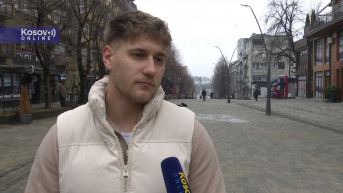
Associate of the NGO New Social Initiative Aleksandar Sljuka says that in 2008 the international partners who supported Kosovo’s independence did so because Kosovo leaders, the Albanians, at the time guaranteed an extensive set of rights for the non-majority Serbian community, but that this has not been particularly respected in practice.
They guaranteed, he emphasizes, that if they were assisted in terms of declaring independence, they would enable Serbs to live on equal terms with all other citizens and enjoy a high level of rights.
“Within the framework of the Ahtisaari Plan, local autonomy and certain models of power-sharing were also guaranteed. Over the years we have seen that many things looked very good on paper and that this broad scope of rights guaranteed to the Serbian community was not particularly respected in practice. We have seen numerous institutional discriminatory practices continue in the context of what was guaranteed, and in addition we have seen that the Serbian community has also suffered extra-institutional pressure in various ways, which Kosovo institutions did not consider it appropriate to address,” Sljuka told Kosovo Online.
If one looks at what was guaranteed and what the international community expected from Kosovo, he notes, it can be said that this has not been fulfilled and that in recent years the situation for the Serbian community has dramatically worsened.
“There are two parallel realities, where in one Albanians are probably very satisfied with how Kosovo has developed and how far they have come on that path, while on the other hand there is a completely different reality if members of the Serbian community are asked how they have been treated over these 18 years and whether anyone asked them anything during that time,” Sljuka says.
He assesses that Kosovo did not achieve full sovereignty and international recognition in a short period, as it expected in 2008, but that on the other hand it did manage to establish a considerable number of institutions.
“Kosovo is currently recognized by, more or less, half of the United Nations member states. If those were the goals, for Kosovo to affirm itself by joining all international organizations, that is not the situation. It is not a member of the main international organizations it sought to join, for example the United Nations, the EU, NATO. That did not happen and if viewed in that sense, Kosovo’s success is partial,” Sljuka states.
Internal sovereignty, he adds, has also not been fully consolidated, given that the Belgrade–Pristina dialogue under European Union mediation is still ongoing and that there are numerous unresolved issues.
“Even after this campaign of closing Serbian institutions, they are still present, although they are under pressure. Healthcare and education institutions are still functioning in Kosovo, they have not been integrated into the Kosovo system, they have not been abolished, and we cannot say that sovereignty has been fully consolidated internally, even though work has been done on that in recent years,” he notes.
Things look different, he says, if viewed from the perspective that in 2008 the process essentially started from nothing and that Kosovo was an idea supported by its traditional partners, without clarity on what its path would look like.
For half of the United Nations member states, Kosovo is, he adds, a fact and a situation on the ground, regardless of what anyone thinks about it and regardless of what Serbia or official Belgrade think about it.
“They have managed to establish many institutions and achieve autonomy and independence in the sense that they can carry out many functions on their own, compared to 1999 when we had the UNMIK administration managing everything. We have reached a point where international organizations on the ground now play almost no effective role or control, and all of that is carried out by Kosovo institutions. So the success is partial, it depends on the perspective from which one looks,” Sljuka points out.


0 comments