
Smajlovic: There is no consensus on Kosovo because the opposition hopes this issue will topple Vucic from power
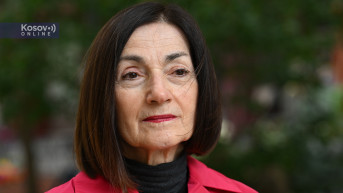
There can be no consensus on Kosovo in Serbia's political scene because, within the pro-European opposition, there are people who would like President Aleksandar Vucic to formally recognize Kosovo, that it would then bring him down from power and then have their disappointed voters fall into their laps, and once in power, they would no longer need to deal with that issue, journalist Ljiljana Smajlovic says for Kosovo Online.
"This is evident in the fact that this part of the opposition is no longer willing even to repeat the phrase 'we will never recognize Kosovo.' We know from WikiLeaks that the US Embassy told Tadic's government 15 years ago, 'Don't obstruct the talks, but feel free to say that you will never recognize Kosovo.' This was when the US recognized Kosovo. Now we have come to a point where many people in the pro-European opposition won't even repeat that ritualistic phrase," she notes.
Regarding the national, right-wing opposition, Smajlovic continues, they supposedly agree on one issue, which is opposing the Franco-German agreement.
"But we have seen that even on that one issue around which they supposedly agree, they cannot politically unite. It seems to me that, in a way, this shows that it is not their main issue, as they assure us, that it is not their goal of existence, and their hope is that people afraid that Vucic will betray Kosovo will somehow come running to them in despair, not knowing where else to turn. In reality, Kosovo is not their main issue," says Smajlovic, who believes that Kosovo will not be a major topic in the campaign for the upcoming parliamentary elections scheduled for December 17, let alone resulting in any national consensus.
When asked about how the lack of political unity on the issue of Kosovo complicates Belgrade's positions in dialogue with Pristina and in relations with the international community, Smajlovic says that, in one way, it doesn't complicate things because "mediators, or the West, know that Aleksandar Vucic has control over the political scene in Serbia."
"They know that when they negotiate with him, they are negotiating with Serbia and that there won't be some political force emerging that could threaten what he represents for Serbia. However, the lack of national consensus actually harms the impression the world has of us. It harms the fact that opposition parties never address their European allies and friends, write to Western media, or criticize Western diplomats who pretend not to know the word 'Serbs' when it comes to Kosovo," she says.
She cites an example where the French ambassador to Kosovo recently, during a visit to Novo Brdo, said it was a place where all local communities had contributed, avoiding saying that it was a Serbian medieval city.
"And that the contribution of some other communities was more about destroying Novo Brdo than contributing to it. Therefore, people who truly have allies, or at least publicly and vocally count on their allies in the European Parliament, the European Commission, the EU, all international bodies, they don't speak up to defend Serbian interests, they don't speak up to strengthen our arguments. In my opinion, this leaves a bad impression on the intermediaries. It is clear to everyone that someone is crouching here, waiting for this issue to disappear so they can then engage in politics as they imagine it, without Kosovo," Smajlovic concludes.



0 comments