
Smiljanic: The Serbs in the YU program building in Pristina survived a calvary, thought we would all be killed
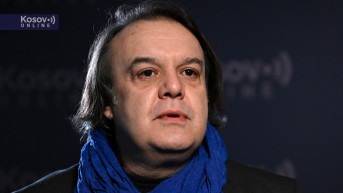
From 8:30 PM until around midnight, when we were rescued and evacuated by Irish KFOR troops, the Serbs living in the YU program building in Pristina on March 17, 2004, went through a real calvary. We thought we would all be killed. Three Albanians attacked me with knives in the hallway of the building. I had 12 stab wounds, one of which was in the neck area and could have been fatal. Unfortunately, no one has ever been held accountable for what the Serbs endured in this building, as well as in many other places on March 17, Dragan Smiljanic says for Kosovo Online.
A native of Belgrade, Smiljanic is one of several hundred Serbs who were working in Kosovo at the time but lived in Pristina, in the former YU program building.
He was employed by the Danish Refugee Council for Return in Pec and Prizren.
"My part of the duties was the return to the village of Vidanje near Osojane. And we had results; people started to return," Smiljanic says.
He explains that tensions were high across Kosovo during that month, but everything culminated on March 17, around 8:00 PM.
"I think the Albanians started to gather shortly after the evening news. Suddenly, around our building, which is in the shape of the Latin letter 'L', with five entrances, there were thousands of people. It was known that only Serbs, or non-Albanians, lived in the YU program building, and they also knew that there were several dozen children and elderly people," Smiljanic recalls.
He says that around half past eight, cars around the building started to be set on fire, and Molotov cocktails were sporadically thrown into ground-floor apartments.
"By around 9:00 PM, intense aggression began and an attempt by those people to enter the building. Fires started, cars were set ablaze, and then the chaos ensued. At my entrance, there were ten children under the age of ten. For those of us who were in that building, it all led to only one scenario. We thought that no one would survive," Smiljanic recounts.
He explains that the YU program building has five entrances and that until the beginning of that year, they were secured by KFOR personnel.
When the attack occurred, he emphasizes, the Serbs were left to fend for themselves, without the possibility of calling for help.
"We didn't even have the opportunity to call the police or any other service and say, 'We have a problem, we need evacuation from here.' Until 11:00 PM, none of the security forces representatives, specifically KFOR, showed up," he says.
He explains that around half past nine that evening when the chaos reached its peak, they saw that several members of the Kosovo Police had arrived in front of the building.
"They were probably high-ranking. It was evident that with their authority, accompanied by a few colleagues, they were trying to stop the crowd. But that was impossible," Smiljanic recalls.
When the ground-floor apartments started to burn, he says, the Serbs in the building realized that things had taken a serious turn.
Some of them barricaded themselves in their apartments, while the larger group, especially those with children, climbed to the attic and tried to break through the walls to transfer at least the youngest ones from the most endangered parts of the building.
"We tried to break through the walls in the attic because the second and third entrances were the most targeted, they were the first to burn. We wanted to reach safer parts of the building through the roof, actually to move the children there. But that didn't happen. They were coming, throwing cocktails, burning cars, and at one point they even entered. That was somewhere between nine and ten o'clock in the evening," Smiljanic recounts.
He explains that the violent intrusion by the Albanians was not massive but that groups of men, mostly younger people, were breaking in.
Seeing that the ground-floor apartments were on fire, Smiljanic decided to go down and check on the families living there.
"A very good friend of mine today lived on the ground floor with her daughter and young grandson, and another person who lived alone. I wanted to see what was happening to them. My entrance was at the corner, so when you enter the staircase system, they lead you along the building, and on the left and right side are hallways with apartments," Smiljanic explains.
Somewhere along that path, he encountered a group of three young Albanian men.
He estimates that they were no older than 18.
"No one was in the hallways. Everyone was either in their apartments or in the attic. They approached me from the side, and there was a small physical altercation; you fight in those moments. But then they pulled out daggers. I have about 12 stab wounds, one of which could have been fatal, thank God it wasn't," Smiljanic says.
Today a freelance artist in the field of applied arts, Smiljanic was previously close to completing his medical studies. He knew perfectly well what had happened to him and what needed to be done. So, he returned to his apartment on the third floor.
Neighbors saw him completely bloody, but he knew he had at least another half hour before he passed out from blood loss.
"Then around eleven, maybe half past eleven, members of the Irish KFOR contingent arrived with transporters. I don't know who called them or how because Pristina was not in their sector of responsibility; they were stationed about 30 kilometers from Pristina. There's even a story that they did it on their own initiative. I knew that March 17 was the Irish national holiday, St. Patrick's Day, a date they greatly respect. Maybe that's why they decided to help us," Smiljanic says.
The Irish soldiers managed to evacuate the Serbs trapped in the YU Program building in Pristina around midnight.
They transferred them all to the Multinational Brigade "Center," led by British KFOR members at that time.
At the same time, they urgently attempted to transfer Smiljanic to the hospital within the US military camp Bondsteel, but they were told that there was no more space available there.
"German doctors who were in the camp in Prizren allowed the operation to be performed there. For many years, I tried to find that Irish soldier who saved me, but I didn't succeed. I wanted to thank him; that man saved my life," Smiljanic says.
When asked how many more people were injured in the YU Program building, he says he knows that several other people were attacked, but he emphasizes that all those who survived the March Pogrom suffered lasting psychological injuries.
"No one provided psychological help to those people because those wounds remained secret. All those people in Pristina, Svinjare, in Pec or Prizren. They are all permanently physically damaged, especially psychologically," he emphasizes.
After 2004, Smiljanic continued to work for the Danish Refugee Return Program for some time.
He emphasizes that despite what he experienced on March 17, 2004, he has not stopped returning to Kosovo.
"I go regularly to Kosovo. I have no problems with Kosovo Albanians or Serbs. I go down there and work whenever I can. Unfortunately, the return process has been completely dead for the last few years," Dragan Smiljanic concludes.



comments