
Sretenovic: At the Vucic–Macron meeting it was likely pointed out that the Albanian side is not fulfilling its obligations
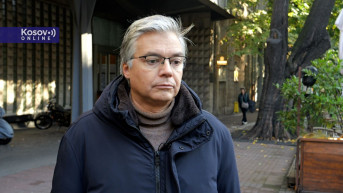
Historian Stanislav Sretenovic told Kosovo Online that yesterday’s visit of Serbian President Aleksandar Vucic to Paris had three aspects: a symbolic one, an economic one, which is the most important, and a third, political one. Within that political aspect, he believes that when it comes to Kosovo, there is a possibility for Serbia to rely on France in a cultural sense and in the protection of Serbian historical and artistic heritage in Kosovo.
Sretenovic assumes that one of the topics of yesterday’s meeting between President Vucic and President Emmanuel Macron was the establishment of the Community of Serb Municipalities in Kosovo.
“I think that was one of the topics, and that this entire activity of Serbian diplomacy directed toward France is aimed precisely at showing that we are now the good students, while the Albanians, with their very radical positions expressed through the extreme policies of Mr. Albin Kurti, are the ones who are not fulfilling their obligations. That is the essence of the political part of the visit, but it still remains in the sphere of negotiations, testing the waters, and attempting to demonstrate goodwill on the Serbian side and the extremely unacceptable behavior of the Albanian side at this moment, which is intolerable by European standards,” the historian says.
The symbolic aspect of Vucic’s visit to Paris, as Sretenovic explains, is related to the fact that yesterday was November 13, which is two days after November 11 and the 107th anniversary of the French–Serbian and Allied victory and armistice in the First World War. At the same time, he points out that November 13 is a symbolically very important date for the French, because France on that day pays tribute to the victims of the 2015 terrorist attack, in which around 130 people lost their lives.
“By coming to Paris yesterday evening, President Vucic paid tribute to those French victims in a symbolic sense and in a way took part in the grief of the French over the loss of those innocent lives,” our interlocutor says.
Sretenovic considers the economic aspect of the two presidents’ talks the most important, because France and Serbia are on the path toward significant economic cooperation, and because in recent times French–Serbian economic relations have seen exceptional development, based on the strategic partnership agreement signed by France and Serbia in 2011, which has only recently begun to be truly implemented and take shape.
“They discussed French investments, the arrival of new major French companies, such as Alstom, a major company for the construction of trains and railways, related to the metro construction project in Belgrade. The arrival of Alstom could also contribute to the general development of Serbia’s railway network and the railway planned toward the south, since the one toward the north, toward Subotica, has been completed. Another important piece of information is that Serbia will move toward developing artificial intelligence and its computing capacities. France has a very strong company in the computer industry, Bull, which can produce large computers for major systems that could then electronically monitor, for example, traffic, which is very important nowadays,” Sretenovic says.
The third segment of the economic talks, he adds, was nuclear energy, where the two presidents announced that Serbia could develop its energy system based on nuclear power, following the French model.
“What form this cooperation and concrete implementation will take, we will see in the coming months, when the signing of specific contracts for the implementation of these projects is expected. However, the key point is that French–Serbian economic cooperation is currently on an upward trajectory, and that trade exchange currently reaches around 1.7 billion euros. The goal is to exceed two billion euros in that segment, which was announced yesterday, and it will likely surpass that mark soon, as well as to increase the presence of French companies in Serbia, of which there are currently 130 employing about 13,000 Serbian workers. This is good, but not enough. Germany employs around 80,000 Serbian workers. So the goal is to increase and deepen cooperation,” he says.
France and Serbia, according to him, have different political positions, because France recognizes the self-proclaimed Kosovo, and Serbia does not, but this fundamental political difference is overcome by strong economic cooperation.
“It is also overcome by the fact that the Serbian side has respected political agreements, accepted Kosovo’s electoral system, and won its ten municipalities in a democratic way. Since that political segment of the visit was not covered by the two presidents, at least publicly, I assume that they discussed the fact that Serbia has fulfilled its obligations, that it has taken the first step toward forming the Community of Serb Municipalities, and that the intention is to show that the Albanian side has not done so. In this long-lasting political contest, it seems to me that one should also consider the possibility of relying on France, although that reliance, in my opinion, apart from the cultural sense and the sphere of culture, and here I primarily mean Serbian heritage, historical and artistic, in Kosovo, does not yet extend to political support from France in terms of withdrawing recognition of Kosovo’s independence,” Sretenovic says.
He emphasizes that it can be said with certainty that President Macron is one of the most important interlocutors of President Vucic, and that Serbian diplomacy achieved a major success when it fostered the personal friendship between the French and Serbian presidents.
“The two of them have become personal friends, and that personal-level friendship in diplomacy, in international relations, is very important. Besides the personal level, we have the interstate level, which is based on over two centuries of good French–Serbian relations, crowned during the alliance in the First World War, and filled with remembrance that has its tangible expression throughout Serbia and throughout France. Monuments to French–Serbian friendship exist across Serbia, in Belgrade, Zajecar, Negotin, and so on; streets were named after French politicians and generals of that era. In France, monuments were also erected in honor of Serbia and the Serbian and French victory and alliance in the First World War. So that is the foundation of interstate relations. Within those interstate relations, there is a tendency based on strategic partnership to move toward more French investments in Serbia. Serbia wishes to adopt the transfer of French knowledge and the transfer of French business culture, which is very precise, organized, focused, controlled, and I think this is very important for the interstate level,” Sretenovic notes.
The working dinner that lasted three hours, although announced to last an hour and a half to two hours, he says, reveals quite a lot, even though it is not much time for in-depth discussions between the two presidents.


0 comments