
Stanic: Pristina's political statements make Kosovo less attractive for foreign investors
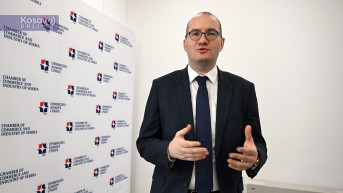
The atmosphere in Kosovo and political statements directed towards official Belgrade negatively impact the level of foreign investment in the region, Bojan Stanic, Assistant Director of the Strategic Analysis, Services, and Internationalization Sector at the Serbian Chamber of Commerce, warned, assessing that both economies suffered due to decisions and rhetoric from Kosovo's authorities but that Kosovo's market was far more vulnerable given that it was significantly less developed and economically less powerful compared to Serbia's.
Stanic emphasizes that due to "ill-considered political statements," investors from European countries often choose to invest in countries like India rather than the region, despite being geographically less accessible.
However, he believes that investors haven't lost interest in the Western Balkans, highlighting that nearly 50 percent of all foreign direct investments in the region are directed towards projects in Serbia.
He says that all market analyses indicate that Serbia is the most attractive destination for foreign direct investment, thanks to its geographic position, infrastructure, connectivity with European countries, financial incentives from the government to investors, and numerous free trade agreements.
"Investors haven't lost interest in investing in the entire Western Balkans region. Serbia leads primarily due to its physical characteristics, it has the largest market both in terms of population and territory. On the other hand, it boasts excellent geographic positioning, despite being landlocked, as all European corridors pass through Serbia. Thirdly, there is the financial and technical support from the government for incoming investors, as well as agreements we have on free trade with countries like EU members, regional countries, the Eurasian Union, Turkey, the recently signed agreement with China set to be fully implemented from January 1 next year, and of course, agreements under negotiation with South Korea, Egypt, and the UAE," Stanic stated for Kosovo Online.
Kosovo's Prime Minister Albin Kurti often speaks about threats of war and potential attacks from Serbia, and Stanic points out that such rhetoric repels investors, even though these statements are mostly part of daily politics rather than reality.
"The atmosphere in Kosovo certainly negatively affects the arrival of foreign investors, considering that many investors don't delve into whether these statements are merely part of daily politics or represent a deeper risk. Therefore, such statements pose a significant problem for potential investors," he explained.
He adds that many investors hesitate about investing, given the overall geopolitical situation in Europe; they further doubt the ability of regional governments to maintain stability, especially political stability, which, he points out, is a prerequisite for broader macroeconomic stability.
He notes that it has become "popular" to talk about the potential outbreak of war to achieve political goals, although this undermines economic potential. Time is passing, Stanic warns, and "other players are entering the market."
"Now many EU firms are orienting towards India, which is a distant market but more stable in the long run for them due to cheap labor, raw materials, and all other factors of production. You have a situation where such statements contribute to precisely that. They absolutely need to be thoughtful and cannot be made on a whim because they have very long-term consequences for the economy," Stanic assessed.
He observes that the atmosphere in Kosovo and the rhetoric from Pristina have a much smaller impact on the Serbian economy than on the Kosovo one, and he adds that the interest of investors is also affected by the departure of people, i.e., potential consumers, from the territory of Kosovo.
"Political statements and the atmosphere in Kosovo affect Kosovo and Metohija more because the market is much smaller and its economic power is incomparably weaker compared to Serbia. On the other hand, the potential is gradually lost due to the declining number of people living there, primarily consumers. This happens, of course, in Serbia as well, but somehow, considering that Kosovo's market is much less developed and much less attractive to foreign investors, such statements simply do more economic harm from the perspective of the population of Kosovo and Metohija," Stanic said.
Discussing the relationship between Belgrade and Pristina in economic terms, Stanic says that the goods shipped to Kosovo have found their consumers because the price/quality ratio was very favorable for the people "living down there."
However, as he says, Pristina's policies and the measures they take largely disrupt that concept and harm further cooperation.
"It is a fact that when those sanctions, the tariffs, were introduced, and when they were abolished, the level of consumption and overall exchanges we had with the market of Kosovo and Metohija returned to the time before the tariffs. Today, we have a different situation, the ban on the import of Serbian goods has been going on for almost a year, and in that sense, the population there, which is already under pressure from the consequences of inflation in the long run, must now procure products that are less price-competitive," he said.
Stanic concludes that the local economy in Kosovo depends on local countries, so it is logical for economic relations to be concentrated on Serbia rather than on more distant markets.

0 comments