
Starovic: Serbia has done much on its European path; Victory of the Serb List undeniable, obstructions from Pristina likely
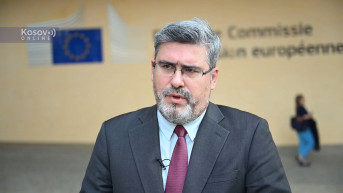
Serbia’s Minister for European Integration, Nemanja Starovic, stated that Serbia has already achieved significant progress on its path toward the European Union, expressing hope that concrete actions will now follow. Speaking about the situation in Kosovo, he said that the victory of the Serb List demonstrates the strength and unity of the Serbian people, but warned of possible obstructions coming from Pristina.
Commenting on the results of the local elections, Starovic said in RTS’s Morning Program that he was pleased with the Serb List’s victory in the majority of Serbian communities in the province.
“This is a great success not only for the Serb List but for the entire Serbian people in Kosovo and Metohija. The total number of Serbs who turned out to vote is the highest in absolute terms since 2001, which reflects responsibility, determination, and love for Serbia. Still, we expect serious obstructions orchestrated by Albin Kurti, particularly regarding obstacles for our elected mayors,” he emphasized.
He underlined that, despite their clearly expressed democratic will, Serbs in Kosovo will continue to face many difficulties in forming local administrations.
Commenting on the key messages delivered by European Commission President Ursula von der Leyen during her visit to Belgrade—specifically her call for concrete actions—Starovic expressed confidence that Serbia has already done enough on its European path.
“The visit of President von der Leyen was conducted in a very constructive tone, it was extremely substantive, and we can be satisfied with its results. The key messages were that there is goodwill and support from the European Commission to accelerate Serbia’s reform processes—possibly even to double the pace—and to achieve tangible progress on the road to EU membership,” Starovic stressed.
He rejected claims that von der Leyen’s visit was more critical than previous ones, as suggested by some in the public.
“Those are prophets of doom. The entire atmosphere of her visit was positive. Everything we discussed with the European Commission delegation concerned ways and mechanisms to speed up Serbia’s reform process toward the EU, all in the best interest of Serbian citizens,” said the minister.
Starovic believes that the opening of Cluster 3 is near, adding that he senses a “green light” from the European Commission on the issue, which, he notes, had been delayed due to the war in Ukraine.
He emphasized that Serbia received praise from the European Commission delegation for its agreements with civil society concerning amendments to the electoral roll law and the selection of members of the Regulatory Authority for Electronic Media (REM).
“We have raised our alignment with EU foreign and security policy to a higher level, and we are doing everything to open Clusters 2 and 5 as well. We have strong administrative capacities, but there is also a political dimension that prevents me from being overly optimistic. We have done everything that depends on us,” he said.
Speaking about the economic cost of aligning Serbia’s foreign policy with the EU’s principles, Starovic acknowledged that such a cost exists but stressed that it would be much higher if Serbia had chosen a different path.
“Our current rate of alignment is around 61 percent, which is about 10 percentage points higher than in October of last year. Our obligation is to progressively raise that bar, but it’s never possible, as it is for some EU member states, to fully harmonize our foreign policy with the Union’s trends,” the minister noted.
He emphasized that Serbia is the largest economy in the Western Balkans, meaning its reform processes are the most demanding, and their evaluation and verification are consequently more complex.
Speaking about the upcoming Berlin Process summit in London, which will bring together leaders and representatives of Western Balkan countries, Starovic said the event would be of great importance.
“The summit will be attended by Serbian Prime Minister Djuro Macut, as well as many other key European leaders, including British Prime Minister Keir Starmer. We expected more from the Berlin Process over these 11 years—that is clear—but we have still achieved certain things through it: primarily the strengthening of regional cooperation in the Western Balkans, the establishment of a roaming-free zone, and the construction of regional road infrastructure. From the meeting in London, we expect to further develop the common regional market,” Starovic concluded.
0 comments