
Starovic: International and domestic public increasingly speak of Racak as a great deception
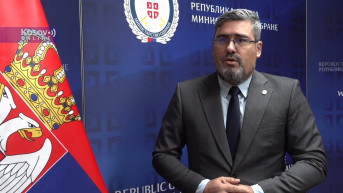
Nemanja Starovic, the State Secretary of the Ministry of Defense of Serbia, stated that after so many years since the "Racak case," there was an abundance of evidence, causing both the domestic and international public to increasingly refer to it as a "great deception" rather than a so-called massacre.
"So many years later, today we have an abundance of evidence for which the informed part, not only domestic but also international public, speaks more about the deception of Racak than the so-called massacre. What represents a phenomenon we often encounter is that the immediate actors in these events, such as investigator Helena Ranta, but also others, often become willing to tell the truth about events only years after they happen when they are no longer in the positions or functions they held. Also, what we encounter is that locally interested actors, primarily the Provisional Institutions of Self-Government in Pristina, are somewhat aware of how fragile the narrative of the alleged massacre in Racak is and how it stands on shaky ground. Precisely because of that, they try to strengthen that narrative through measures of judicial and judicial-police repression, punishing anyone who dares to say in Kosovo and Metohija what represents an undeniable truth, that it is a lie, that it is about a perfectly conducted counter-terrorist operation," Starovic said for Kosovo Online.
He said that the case "served through the creation of a narrative about the alleged massacre, for the bombing, or aggression against the Federal Republic of Yugoslavia."
He reminded of the truth about the "Racak case."
"On this day in 1999, special police units conducted a counter-terrorist action in the village of Racak, eliminating the headquarters of the so-called 161st brigade of the terrorist Kosovo Liberation Army, 45 members of that terrorist formation were eliminated. The action was carried out in a very professional manner, and the verifiers of the OSCE were informed in advance, and even three teams of verifiers attended the implementation of that operation. Unfortunately, that did not prevent the head of the OSCE verification team, William Walker, from creating a narrative of the so-called massacre in Racak in the following days, even if the preliminary findings of investigative teams, whether we are talking about our investigators or an international team of pathologists from Finland, clearly and undeniably spoke about there being no executions, that all those who died, according to the type of gunshot wounds, died in combat," Starovic emphasized.
He added that the findings of the so-called paraffin gloves undeniably spoke about their use of firearms.
"The narrative that was created actually served to launch a massive media campaign that ultimately resulted in the crime of NATO aggression against the Federal Republic of Yugoslavia. Helena Ranta herself, who led a team of Finnish investigators, testified nine years later in her autobiographical book about the tremendous pressures she was under from William Walker and the Finnish Ministry of Foreign Affairs to modify her preliminary report and make it vague enough to enable William Walker later to go two or three steps further and launch the narrative of the so-called massacre. The consequences of the legend created about the so-called massacre in Racak were catastrophic and resulted in thousands of human lives lost and enormous material damage during the NATO alliance's aggression," Starovic recalled.

0 comments