
Starovic: Preserving territorial integrity is of paramount importance for Serbia
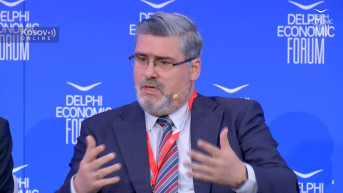
Serbia’s Minister for European Integration, Nemanja Starovic, stated at the eleventh Delphi Economic Forum, held in Athens, that preserving territorial integrity is of utmost importance for Serbia, noting that this issue is no different from respecting the territorial integrity of Cyprus and Ukraine.
He emphasized that it is the duty of candidate countries to gradually increase the level of alignment of their foreign policy with the European Union. Serbia’s foreign policy, he said, is nearly 70 percent aligned with Brussels.
According to him, since the 2022 Russian invasion of Ukraine, certain EU member states have expected Serbia to fully align with Brussels’ policy toward Moscow. He recalled that Serbia respects the territorial integrity of Ukraine and that 93 percent of aid from the Western Balkans to Kyiv comes from Serbia.
Starovic was one of the key speakers on the panel “State of the World – EU Enlargement to the Western Balkans” at the forum.
In his opening remarks, Minister Starovic congratulated Albania and Montenegro on their progress toward EU membership, but stressed that the accession process is not a race and that the focus should be on structural reforms in each country.
According to him, the European Commission report shows that Serbia has achieved a high level of preparedness for accession, immediately behind Montenegro.
EU membership is not an end goal, he said, but a means leading to the economic and political convergence of each candidate country.
Greek Minister of Foreign Affairs Giorgos Gerapetritis said that at the 2003 summit in Thessaloniki, Greece initiated the EU enlargement agenda, but noted that over the past 23 years the EU has not provided a clear path for the Western Balkan countries. According to him, now is the time to revitalize that process.
“We need to reverse the sense of disappointment or fatigue among the states and peoples of the Western Balkans,” he said, adding that the EU has made promises it has not fulfilled.
Gerapetritis stressed that EU enlargement is in fact the unification of Europe and announced visits to all Western Balkan capitals in the coming months.
Montenegro’s Deputy Minister for the European Union Ivan Ivanovic expressed satisfaction with the country’s progress and said he believes it will benefit all states in the region.
“The working group in Brussels for preparing Montenegro’s accession treaty will be formed, and we will enter concrete negotiations, which will mean that the obligations of both sides will be defined,” he said, adding that he believes this treaty will serve as a model for other countries in the region.
Kosovo’s Minister of Foreign Affairs and Diaspora Glauk Konjufca highlighted the importance of commitment to EU values, adding that citizens of Kosovo are the most supportive of EU membership in the Western Balkans.
According to the latest European Commission report, Kosovo has made progress in 35 areas, Konjufca said, adding that the lifting of measures is an important step toward accelerating the process. He also called on the EU to grant Kosovo candidate status, recalling that Pristina applied for membership in 2022 but is still awaiting the European Commission’s questionnaire.
“We must not allow the Western Balkan six to become five. Granting Kosovo candidate status is crucial in this regard,” he said.
Bosnia and Herzegovina’s Ambassador to Greece Dragan Vukovic said that the country faces numerous reforms, which makes it difficult to form a negotiation team with the EU.
According to him, nearly one billion euros from the Growth Plan is of key importance for Bosnia and Herzegovina. He also stressed that countries in the region, including Greece, are helping Sarajevo overcome its challenges.
North Macedonia’s Deputy Minister of Foreign Affairs Zoran Dimitrovski emphasized the importance of support for Skopje from Athens and welcomed the announcement that Western Balkan countries will be invited during Greece’s upcoming presidency of the EU next year.
“We have waited a long time, and some countries in the Western Balkans are only at the very beginning of negotiations. The problem North Macedonia faces is bilateral disputes with its neighbors and meeting the Copenhagen criteria,” he said.
Albania’s Minister for Europe and Foreign Affairs Ferit Hoxha said that the Thessaloniki promise remains just a promise and that all countries in the region have been waiting for progress for 20 years.
“We must fulfill our obligations. We must truly ensure that promises on both sides finally reach the point where they are actually realized,” he said.
He noted that Albania has made significant progress, indicating the commitment of both Brussels and Tirana to the process.
The implementation of reforms and the closing of chapters are proceeding simultaneously, he added, stressing that Albania’s future lies in the EU and recalling that enlargement has always been beneficial for Europe.
The Delphi Economic Forum is a prestigious international conference held annually in the Greek city of Delphi, bringing together leaders from politics, business, diplomacy, and academia to discuss key global and regional challenges.


0 comments