
Suspension of the U.S.–Kosovo Strategic Dialogue: Will political fallout be followed by other consequences for Pristina?
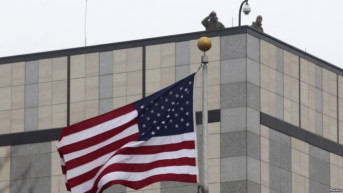
A bolt from the blue—and from Washington, no less. Then, a storm. The decision to suspend the planned U.S.–Kosovo Strategic Dialogue surprised everyone and sparked sharp reactions from experts and the opposition in Pristina. All fingers point at the leader of the Self-Determination Movement, Albin Kurti. Analysts say this is a clear political message from the new U.S. administration that will undoubtedly be followed by economic consequences. The question, they add, is whether this is only the beginning
Written by: Djordje Barovic
“The closures of institutions on Friday confirm our concern about the actions of the caretaker government that are increasing tensions and instability in Kosovo. As we have said before, security and stability are of key importance for the country and the region,” the U.S. Embassy in Pristina told Kosovo Online earlier this week when asked about the closure of the Serbian Health Insurance Fund (RFZO) and the Pension and Disability Insurance Fund (PIO) branches in North Mitrovica.
The response came only a few days after the official announcement that the U.S. is suspending the planned Strategic Dialogue with Kosovo.
While Kosovo’s President Vjosa Osmani expressed regret and concern over the decision, former Prime Minister Isa Mustafa demanded institutional accountability and pointed a finger at both her and Albin Kurti.
Economists, for their part, argue that the U.S. move could be very harmful to Kosovo’s economy.
“This is the worst thing that could have happened to Kosovo since 1999. We need American investment. These policies that have created a hostile environment have affected foreign investment, and citizens are suffering. Kurti’s government has blocked the absorption of foreign investment. This is the result of Albin Kurti’s policies and harsh rhetoric,” said Lulzim Rafuna, President of the Kosovo Chamber of Commerce.
The American Chamber of Commerce went a step further, calling the suspension of the Strategic Dialogue “a step backward for Kosovo’s economic and diplomatic aspirations.”
Clear signals
Aleksandra Joksimovic, Director of the Center for Foreign Policy, believes the U.S. decision is a consequence of the “conduct of policy” in Pristina and also “a clear signal” that “much harsher reactions” from Washington may follow.
“Pristina has for a long time been receiving warnings regarding its policies, especially towards the Serbian community. Kurti has already faced certain EU sanctions—admittedly very mild and often not enforced. But the U.S. Embassy has frequently spoken out sharply against some of his steps that have disenfranchised the Serbian community. In that context, we can say this is the first very strong step by the U.S. administration, clearly showing that Kurti’s approach can elicit a tougher American response,” Joksimovic told Kosovo Online.
She underscores that this is the first concrete sanction by one of Pristina’s strongest partners and promoters.
“For the first time, we have something quite tangible on the table. America is seen as Pristina’s strongest partner, which for the most part views the U.S. as part of the solution—on its own terms. The U.S. has long been a promoter of independence, but it is evident that the way Kurti conducts policy is unacceptable to Washington,” said the former ambassador to the United Kingdom.
She recalls that the U.S. previously played a role in bringing down Kurti’s first government and notes that presidential elections are scheduled in Kosovo next year.
“We will see how this affects party ratings, but there is certainly dissatisfaction with the policies being pursued in Pristina. America is now sending a clear signal that this needs to stop,” Joksimovic said.
Asked whether the suspension of the Strategic Dialogue could already affect the October 12 local elections, Joksimovic noted that “the dynamics of local and parliamentary elections are not always the same.”
Still, she does not rule out such an effect because “Kurti is losing U.S. support.”
“At the local level, voters often focus on specific individuals, so it’s hard to predict how this policy would directly affect Self-Determination in October. But the fact that Kurti is losing U.S. support can generally translate into a decline in his—and his party’s—ratings,” Joksimovic is convinced.
She believes the Albanian opposition parties will try to “maximize” this “precise U.S. signal.”
“They have been talking about this for quite some time, but until now there has not been such a clear and precise indication that the U.S. is concretely opposed to Kurti’s policies,” Joksimovic said.
She stresses that, beyond the political sphere, the U.S. decision will inevitably produce economic effects.
“Policy always impacts the economy. In that context, certain American companies will certainly watch the further development of Pristina–Washington relations more closely and make decisions about their growth or investments accordingly,” Joksimovic noted.
Multiple consequences
Agim Shahini, President of the Business Alliance, told Kosovo Online that, after the U.S. suspension of the Strategic Dialogue, Kosovo faces economic, diplomatic and political consequences, and that one possible measure could be a steep increase in customs duties.
“After being suspended as a strategic partner, Kosovo has effectively been grouped with Russia, China, and Georgia. These four states either lack a dialogue with the U.S. or have had their strategic partnership suspended. This brings economic, diplomatic, and political consequences,” Shahini said.
He reminds that Kosovo is already facing EU economic measures.
“These are the second set of sanctions since Kurti became prime minister. They directly affect citizens’ lives and Kosovo’s progress,” Shahini said.
He is convinced the U.S. decision will indirectly be reflected in the results of the October 12 local elections.
“It will certainly have consequences for both local and central elections,” Shahini said.
Asked how the U.S. decision could affect Kosovo economically, the economist warned that one such measure could be a drastic increase in customs duties on Kosovo’s exports to the U.S.
“The Trump administration is introducing new measures against various countries almost daily. At the moment we have a ten-percent tariff with the U.S., but they can raise it to 50 percent or more. So there will be plenty of fallout,” Shahini asserted.
An “Afghanistan scenario”
Historian Stefan Radojkovic warns that Kosovo could face an “Afghanistan scenario,” i.e., a complete U.S. withdrawal.
He claims the authorities in Pristina are well aware of this and are already seeking a “way out.”
He also notes that the U.S. decision came only after a series of clear warnings.
“This is an interesting outcome because, politically, in terms of security and diplomatically, Pristina depends on the U.S. Suspending their Strategic Dialogue suggests an ‘Afghanistan scenario’. Pristina’s administration has understood this quite shrewdly, which is why it is striving to tie itself to the narratives around the war in Ukraine and a potential Taiwan crisis—hoping Washington will remain sufficiently engaged and focused on Pristina,” Radojkovic told Kosovo Online.
He emphasizes that the suspension of the planned Strategic Dialogue shows the U.S. can redirect its attention or simply devote less attention to Kosovo.
“And that brings the very existence of the Pristina administration into question,” Radojkovic said.
Commenting on the many statements criticizing the ruling Self-Determination Movement, the analyst believes the party has hit “slippery ground” in Washington.
“It appears Self-Determination’s current policy has encountered ‘slippery ground’,” Radojkovic maintained.
Direct consequences for the authorities in Pristina could manifest in several ways, the “most radical” being a reduction or complete withdrawal of the American presence within KFOR.
Another measure could be the suspension of “diplomatic assistance.”
Radojkovic says Pristina is aware of this, and that, in this light, one should view the recent military agreement among Albania, Croatia, and Kosovo, as well as Vjosa Osmani’s “Islamic tour.”
“All this shows they are aware there is no unconditional U.S. support,” Radojkovic stressed.
He believes the suspension will primarily affect U.S.–Kosovo military and diplomatic relations.
As for economic matters, he adds, the decisive role lies with the EU.
“The economic consequences are already being felt, primarily due to the EU. The U.S. is not crucial in terms of the Pristina administration’s economic indicators; its importance lies in military and diplomatic relations. The EU has already taken certain measures that, according to some analysts, are ‘costing’ the Pristina administration around 600 million euros— a significant hit to the financial situation in the context of Kosovo and Metohija,” the analyst said.
He specifies that the worsening economic situation in Kosovo has had the “direct and logical consequence” of new pressures on the Serbian community.
However, he is convinced the U.S. decision may affect the October 12 local elections, as well as possible snap parliamentary polls and the upcoming presidential election early next year.
“The timing of this decision is specific. The statement was made in the middle of the local election campaign. We know the Albanian community— which has lobbied very effectively in Washington since the 1980s— is sensitive to U.S. positions and opinions,” Radojkovic explained.
“This was a way to signal that external actors, primarily the U.S., are the key factor for the survival of the Pristina administration. Hence, this will affect Self-Determination’s ratings,” he is convinced.
On the other hand, this development may contribute to the isolation of Self-Determination by Albanian opposition parties.
“They will likely be encouraged by the U.S. to craft some coalition arrangement, with the expectation that Vjosa Osmani— if she plans another mandate— will be far more cooperative with Washington,” the analyst believes.
In the new situation, Radojkovic finds it surprising that there were no reactions from the German Embassy in Pristina.
“Previously, it was assumed and believed that Germany was the EU member most supportive of Albin Kurti. Now they are silent. Whether that is tacit support or a sign that support for the Pristina administration cannot be expected from the EU side either can be interpreted in various ways, but one thing is certain— it will have consequences for the upcoming elections,” Radojkovic concluded.
An economic and political “catalyst”
Petar Ivic of the Pupin Initiative argues that the U.S. decision to suspend the planned Strategic Dialogue is a precedent in sanctioning “Albin Kurti’s destructive actions,” which will result in waning investor interest and complicate Kosovo’s new trade arrangements.
Ivic notes that when bilateral relations deteriorate, it is “a signal to investors that something is off.”
“We’re seeing a loss of investor confidence, a diminished ability for Kosovo to negotiate new preferential trade arrangements—which is extremely damaging for its economy— and complications in implementing assistance programs that are very important for Kosovo’s underdeveloped economy,” Ivic told Kosovo Online.
He sees one of the “consequences” as the further erosion of the Self-Determination Movement, which he says will already be visible in the October 12 local elections.
“This decision is a kind of ‘catalyst’ for the further decline in support for Self-Determination. We saw a significant drop in support in the previous electoral cycle, which was remarkable. It directly caused this institutional paralysis because Self-Determination has behaved as if it were the sole dominant actor on the political scene, although that is no longer the reality,” Ivic said.
He bases his claim on data showing that more than 85 percent of Kosovo’s population supports the U.S. as its main foreign-policy ally.
“Undermining relations with that actor means losing significant electoral capital,” Ivic noted.
He characterizes the suspension of the Strategic Dialogue’s launch as an American “sanctions precedent” against Kosovo.
“Although the suspension of the Strategic Dialogue is not a direct economic measure, it primarily affects politics, and thereby undermines bilateral relations. This represents a precedent in sanctioning the destructive actions of Kurti’s regime by the U.S.,” Ivic said.
Ivic also believes the reactions in Pristina serve as a reminder that “Kosovo’s decisions must be aligned with U.S. realities.”


0 comments