
State Department on Serbia: American investors positive about investing in Serbia, Expo an opportunity
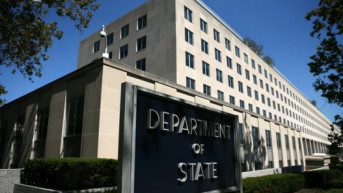
Attracting foreign investments is a significant priority for the Serbian government, which has also identified economic growth and job creation as key priorities and has adopted reforms to various laws, notes the State Department in its Business Climate Report on Serbia. The report adds that American investors are positive about doing business in Serbia and see the Expo as an opportunity for engagement, but also highlights issues such as bureaucratic delays, corruption, and loss-making state enterprises.
The report states that the investment climate in Serbia has “modestly improved” in recent years, driven by macroeconomic reforms, financial stability, and fiscal discipline.
“Attracting foreign investments is an important priority for the government,” the report states.
It recalls that Serbia replaced its 30-month Policy Coordination Instrument (PCI) with a new two-year standby arrangement with the International Monetary Fund (IMF) in December 2022, which provided direct support to the Serbian budget to cover high energy import costs.
Additionally, the standby arrangement reassured government bond buyers that Serbia is likely to benefit from obtaining favorable rates.
“American investors are generally positive about doing business in Serbia due to the country's strategic location, well-educated workforce, English-speaking labor force, competitive labor costs, generous investment incentives, and free trade agreements with the EU and other key markets,” the report lists.
It adds that American investors enjoy equal conditions and can take advantage of various programs designed to attract foreign direct investments (FDI).
“Challenges remain, particularly bureaucratic delays and corruption, as well as loss-making state enterprises (SOEs), a large informal economy, and an inefficient judiciary. Political influence on the economy is also a concern; this issue was highlighted in January 2022 when the government unexpectedly withdrew licenses related to a major proposed lithium mining project in response to public protests,” the State Department notes.
The report adds that the U.S. Embassy in Serbia often assists investors when problems arise, and Serbian officials usually respond to investment-related issues.
It recalls that Serbia has been selected to host the Specialized Expo 2027, presenting an opportunity for American companies to provide technology and equipment, as well as offer expertise and consulting services.
The estimated costs of construction and operation, as well as ancillary projects, are expected to exceed two billion dollars.
“The Serbian government has identified economic growth and job creation as main priorities and has implemented significant reforms in labor laws, construction permits, inspections, public procurement, and privatizations, which have helped improve the business environment. If the government fulfills the promised reforms during the EU accession process, business opportunities should continue to grow,” the report predicts.
Sectors particularly highlighted include agriculture and food processing, solid waste management, municipal infrastructure, environmental protection, information and communication technology, renewable energy, healthcare, mining, and manufacturing.
Companies and officials have noted that the adoption of reforms has sometimes outpaced their implementation.
“The digitalization of certain government functions (e.g., issuance of construction permits, tax administration, and e-signatures) has not yet led to dramatic improvements in processing times and may not be consistently enforced. The government is slowly progressing in resolving problematic social enterprises, through bankruptcy or privatization where possible. The government plans to privatize another 56 companies and is also slowly reducing the inflated public sector workforce in Serbia, primarily through attrition and hiring,” the report observes.
Despite the initial limited economic impact of Russia's attack on Ukraine in February 2022 on Serbia, the report notes that the banking system remains well-capitalized and liquid; however, inflation has risen, driven by increased import prices of energy and fuel, despite Serbia's refusal to join U.S. and EU sanctions on Russia.
It recalls that the U.S. Treasury's Office of Foreign Assets Control (OFAC) included several Serbian companies and individuals on its list of specially designated nationals, some for violating sanctions against Russia. As of April 5, 27 companies and 19 individuals in Serbia are on that list.
The report also notes that inflation in Serbia peaked at 16.2% in March 2023 but fell to 5.6% in February 2024.
It also mentions that Russia continues to supply Serbia with natural gas, while crude oil deliveries ceased on December 5, 2022, due to EU sanctions that prevented Serbia from sourcing Russian oil through the Croatian pipeline.
“Overall, the nominal value of Serbia's exports to Russia remained practically unchanged in 2023 at 1.2 billion dollars, while Serbia's imports from Russia nearly halved from 3.1 billion dollars in 2022 to 1.7 billion dollars due to a slowdown in oil and natural gas imports, recovery of electricity production in Serbia, a mild winter, and sanctions,” the report adds.
0 comments