
Stiplija: EU Presidency a technical process, Hungary cannot accelerate Serbia's accession on Its own
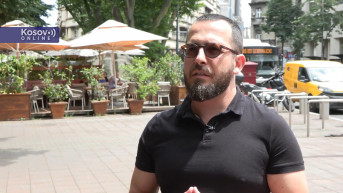
Although Hungary lists enlargement as one of its main priorities during its presidency of the Council of the European Union, it cannot independently accelerate the European integration process of any country, including Serbia, with which it maintains good relations, says Nemanja Todorovic Stiplija, director of the Center for Contemporary Politics and editor of the European Western Balkans portal, for Kosovo Online.
He states that the EU presidency is a technical process and that Hungary cannot create its own agenda independently.
"The country currently holding the presidency, in joint agreement with the country that held the previous presidency and the country that will hold the next presidency of the EU Council, sets the Council's agenda and all the legislation or policies that will be addressed in the coming period. In this sense, Hungary does not have significant power to establish its own specific agenda," says Stiplija.
He notes that Hungary can only do this in partnership with the countries it collaborates with during its presidency. However, even then, as he adds, everything depends on all member states, that is, the heads of state and government who sit in the EU Council.
"The Council must unanimously decide on the accelerated accession of any country to the EU, including all candidates and potential candidates. So, to reiterate, Hungary alone cannot somehow accelerate the European integration process of any state," Stiplija is emphatic.
He also notes that Hungary, as the presiding country, will not have any role in the dialogue between Belgrade and Pristina, as this falls under the jurisdiction of the European External Action Service (EEAS).
"So, the EU High Representative for Foreign Affairs and Security Policy, currently the Estonian Prime Minister Kaja Kallas, together with the new mediator in the dialogue, will lead this process, and it will not have any connection with the country holding the EU presidency," says Stiplija.


comments