
Stojanovic: Lajcak's mandate as mediator without tangible results

Foreign policy commentator Miroslav Stojanovic states that during Miroslav Lajcak's four-year mandate as a mediator in the Belgrade-Pristina dialogue, there were no tangible results, and that he did not succeed in this mission, not because he did not want to but because his maneuvering possibilities were limited.
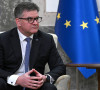
Lajcak was appointed as the EU Special Representative for the Belgrade-Pristina dialogue on April 3, 2020, and his mandate will expire on August 31.
"Although they did not directly participate in the negotiations in Brussels, the United States still 'sat in the other room' and, in any case, were pulling the strings. The fact that Lajcak has strong support from Escobar and the State Department is just a sign that the US closely monitors what is happening there, although the European Union is left to lead this type of dialogue," Stojanovic says for Kosovo Online.
Stojanovic assesses that Lajcak, as an experienced diplomat familiar with this terrain, tried, but despite that experience, he was 'clumsy' several times and speculated with fast deadlines to finish the job.
"Then he postponed it by half a year, which were extremely unrealistic deadlines. For these reasons, this mission can be considered extremely unsuccessful. But also for objective reasons, because the Kosovo knot cannot be cut like that. It's squaring the circle that major supporters of Kosovo's independence, very powerful countries, have tried to solve so hastily, and that is an unsolvable issue. It will take a long time, and this kind of uncertainty naturally affects everyone living in our province, especially Serbs," our interlocutor says.
Stojanovic says that Lajcak was probably chosen as a mediator in the dialogue because he is familiar with the Balkans, having been involved in various missions in this region, but one of the reasons was also that he comes from a country that has not recognized Kosovo.
"At that moment, it was expected that Belgrade would accept him more easily, however, it was a double game; he was Merkel's and Germany's favorite. Lajcak tried at all costs to leave an impression of an impartial mediator precisely because of Pristina, which is why it is very interesting that Pristina has been accusing him of bias in recent weeks, which I interpret as Pristina's battle for his successor, to profile a type of politician who will suit them better. It is not at all surprising that they have spoken in recent days about having great trust in the United States, which is their great protection, but they also mentioned the United Kingdom and Germany," Stojanovic notes.
He adds that even though the end of Lajcak's mandate is not near, the European Parliament elections on June 9 will probably create a completely different political configuration, and Lajcak would probably "have nothing more to look for" there.

0 comments