
Strbac: What we saw in Croatia is now being replicated in Pristina
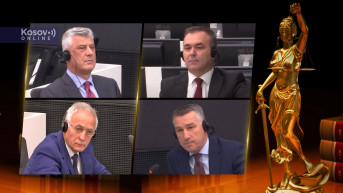
Director of the Veritas Documentation and Information Center Savo Strbac said that there were many similarities between the proceedings in The Hague against the KLA leaders and the earlier cases against Croatian generals, adding that Serbs had reason to believe that the four defendants, who received combined first-instance sentences of more than 80 years, could be acquitted on appeal, Politika reported.
Strbac told Srna that, following the first-instance judgment against the former KLA leaders, developments in Pristina resembled what had been seen in Croatia 15 years ago when Generals Ante Gotovina and Mladen Markac were convicted. He said it was possible that the final outcome of the current proceedings could also be the same, with Hashim Thaci and the other defendants acquitted on appeal.
He noted that Croats now boasted that Operation Storm, for which Gotovina, Markac and Ivan Cermak had been tried, was “as pure as a tear,” and argued that the “terrorist KLA has now been absolved by the first-instance judgment against its leaders in The Hague.”
“Had Thaci, Kadri Veseli, Jakup Krasniqi and Rexhep Selimi, who were high in the KLA hierarchy, also been found guilty of crimes against humanity, that would have meant that the KLA as a whole was terrorist and criminal,” Strbac said.
He recalled that when Gotovina received a 24-year sentence at first instance, it was regarded as an appropriate punishment, and that the combined 81-year sentence imposed on the KLA leaders might initially appear similarly substantial. However, he said, important nuances made the current judgment different.
“They were convicted of war crimes, not crimes against humanity. It essentially comes down to the finding that there was no systematic, planned killing directed by the leadership across the KLA as a whole, which absolves them in that respect,” Strbac explained.
Strbac said another similarity between the two cases, and one he did not consider coincidental, was that Gotovina had been represented by Croatian-American attorney Luka Misetic, who now represents Thaci.
“The Croats—that is, Misetic and his team—credit themselves with having succeeded on appeal in persuading the Court to deliver an acquittal. That is what Serbs fear could happen in this case as early as the second-instance proceedings,” Strbac said.
He said the judgment was now being perceived and portrayed in Pristina as a “shock and tragedy,” much as the first-instance judgment had been in Croatia.
“People cried and protested for days, and then-Croatian Prime Minister Jadranka Kosor commented on the judgment using the same words that Albin Kurti is using now. What we saw in Croatia is now being replicated completely,” Strbac said.
Strbac also pointed out that, since the wars of the 1990s, Croats and Albanians had referred to each other as “brothers in arms.” He said Croatia had exported to Kosovo a model of prosecution that, in his view, was being successfully applied against Serbs there, while Croatia was now also part of the same military alliance with Tirana.
“They have a great deal in common, so Serbs, remembering that the Croatian generals were acquitted, have reason to believe that the same thing could happen now,” Strbac concluded.
The Kosovo Specialist Chambers in The Hague delivered first-instance judgments against four former KLA leaders—Hashim Thaci, Kadri Veseli, Jakup Krasniqi and Rexhep Selimi—on Wednesday. Thaci was sentenced to 25 years in prison, Veseli to 18 years, Krasniqi to 25 years and Selimi to 13 years.



0 comments