
Surlic: Kosovo’s foreign policy subjectivity remains permanently disputed
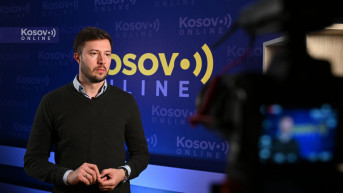
Stefan Surlic, Assistant Professor at the Faculty of Political Sciences in Belgrade, states that since 2008—when independence was unilaterally declared in Pristina—the international community has enabled Kosovo to function as a separate political system with all institutions, including executive, legislative, and judicial branches. However, from a foreign policy perspective, Kosovo has not made significant progress.
“Membership in key international organizations has not been achieved. It is certain that without Belgrade’s consent there will be no membership in the United Nations, which means that Kosovo’s international legal subjectivity remains permanently disputed and has not changed over these eighteen years,” Surlic told Kosovo Online.
According to Surlic, full control over the entire territory of Kosovo represents a political success for Pristina, as does the continued pressure on Serbs, who are viewed as an extension of Belgrade rather than as citizens entitled to full rights, including the right to preserve their distinct identity.
“The government of Albin Kurti has succeeded in exercising absolute authority throughout Kosovo. His focus has been precisely on Serb-majority areas. In that sense, Kosovo has achieved the integration of Serbs, but in the form of forced integration. At the same time, the majority now hold documents issued by Pristina, work in institutions under Pristina’s system, and many have in fact accepted this type of integration—from license plates to mandatory registration with Kosovo institutions. Unfortunately, this has not led to social stability or mutual understanding between Serbs and Albanians,” Surlic assesses.
Addressing the question of how satisfied Kosovo’s citizens—regardless of ethnicity—can be with what has been achieved over the past 18 years, Surlic emphasizes that it depends entirely on the chosen reference point.
“If we compare Kosovo with other post-conflict societies around the world, it is often presented as a positive example. President Donald Trump’s invitation to Vjosa Osmani to participate in the Peace Committee effectively conveys the message: this is what we achieved in Kosovo, and we aim to replicate it in Gaza. Most Western countries view Kosovo as a success story. However, as far as citizens themselves are concerned, none of this post-conflict institution-building has halted the negative trends that existed before: mass migration, emigration, unemployment—particularly among young people,” Surlic notes.
These trends persist, he adds, although from Belgrade it may sometimes appear that Kosovo is frozen in 1999. In reality, it is a society that is evolving and functioning within its own institutions.
“More than 90 percent of Kosovo’s population today consists of Albanians, and they are absolutely loyal to these institutions. Unlike in some other post-conflict societies, there is no widespread dissatisfaction with the political and institutional framework itself. Naturally, as everywhere, there are ideological and political disputes, but there is also a basic societal consensus. Citizens are dissatisfied with the economic situation, yet the majority of Albanians demonstrate strong loyalty to the institutions established after the war,” he explains.
Regarding Kosovo’s position in another 18 years, Surlic says everything depends on an agreement between Belgrade and Pristina.
“Unfortunately, I am very pessimistic about the prospects for lasting normalization between the two sides. The only genuine opportunity to ensure a normal life for the Serb community and guarantee its autonomy lay within the framework of the Association of Serb-majority Municipalities. It is now evident that Pristina does not intend to implement this and that its long-term interest is for there to be as few Serbs in Kosovo as possible. Therefore, I see the coming years—and especially the next 18—as highly pessimistic for the Serb community in Kosovo, and logically accompanied by significantly reduced political will in Belgrade to make any concessions to Pristina,” he concludes.
Neither the prospect of Kosovo’s membership in international organizations nor Serbia’s potential membership in the European Union, he concludes, will in itself lead to lasting normalization and mutual understanding between the two sides.


0 comments