
Surlic on parallels between the Ukraine and Kosovo conflicts: Only the sequence of steps is the same
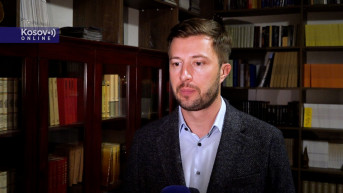
Stefan Surlic, a professor at the Faculty of Political Sciences, told Kosovo Online that the talks between the United States, Russia and Ukraine scheduled for November 10 and 11 in Abu Dhabi should address security guarantees, a halt to attacks on energy infrastructure and a ceasefire in the Black Sea. He believes that, in the case of the conflict in Ukraine, the sequence of steps applied in the Kosovo case could be followed, with Kyiv and Moscow first agreeing to halt the fighting and leaving status-related issues for a later stage.
“In Kosovo, such a sequence was possible because the withdrawal of Yugoslav and Serbian forces in 1999 was followed by the establishment of the international UNMIK administration and the deployment of KFOR. The ‘standards before status’ policy came later and concerned, among other things, the functioning of institutions, freedom of movement and the return of displaced persons. The lesson for Ukraine is that postponing the status issue makes sense when a mechanism is already in place to protect people and implement what has been agreed,” he stressed.
In a written statement, Surlic pointed out that this was where the analogy with Kosovo ended, because if the Russian military and administration remained in the occupied territories, the arrangement would be different.
“The ceasefire line could serve as the basis for monitoring the cessation of hostilities, while Kyiv would retain its legal claim and the UN General Assembly’s condemnation of the attempted annexation would remain the legal and political point of departure. For now, it is more realistic to expect limited agreements,” he predicted.
Asked what concessions each side would have to accept, Surlic said that Kyiv would have to agree to part of its internationally recognized territory remaining under de facto Russian control and, for as long as the ceasefire remained in effect, refrain from attempting to retake it by military force.
“For Moscow, a genuine concession would be to abandon its demand that Ukraine surrender those parts of the Donetsk region that the Russian military does not yet control, accept that the question of recognizing the annexation remain outside the agreement, and agree to an arrangement under which Ukraine could continue to arm itself and receive reliable external support,” he said.
Regarding the role of US President Donald Trump in reaching a Russia-Ukraine agreement, Surlic noted that Trump continued to wield considerable influence because he could bring the negotiators together, use US sanctions as leverage over Moscow and negotiate with European allies on the kind of security guarantees Ukraine would receive.
“Trump retains presidential powers in the field of diplomacy, while any new multi-year funding for military assistance will require cooperation from Congress, where he has lost the majority in both chambers. Broader support in Congress would also give Kyiv greater reason to believe that US commitments will endure beyond Trump’s term in office,” Surlic said.
Surlic added that a sustainable ceasefire would be a political gain for Trump even after his electoral defeat, as it would allow him to point to a tangible result of his mediation efforts.
“That is precisely why there is a temptation to rush to announce an agreement. Washington can relatively quickly secure a concession from Kyiv, which depends on US assistance. It is more difficult to change the Kremlin’s calculus if it continues to believe that it can gain more through war. Trump’s success would be measured by whether he managed to change Moscow’s calculus as well,” Surlic concluded.
comments