
Sutanovac: Council of Europe put in an absurd situation; Possible delay of Kosovo's admission in May
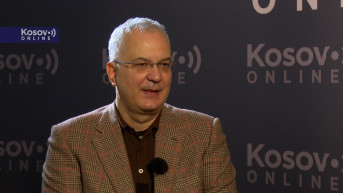
President of the Council for Strategic Policies and former Minister of Defense, Dragan Sutanovac, did not rule out the possibility that the session of the Committee of Ministers scheduled for May 16th might delay Kosovo's admission to the Council of Europe, despite yesterday's non-binding recommendation.
"It's not impossible. In my opinion, there are even solid chances that this decision could be postponed until at least the contentious issues raised in the report are resolved. To be entirely clear, yesterday's decision is essentially advisory and is not binding for the Committee of Ministers, which comes from the ruling parties; these are people in administrations who view the problem of Belgrade and Pristina differently. Remember, this initiative was launched last year, and the Americans pointed out that Kurti is not the man who deserves that kind of political support, so it was postponed. Now, it will be a question of whether to further exacerbate the relations between Belgrade and Pristina and forcibly make a decision that would mean Kosovo will fulfill its obligations in the future, which according to the report should have already happened," Sutanovac told Kosovo Online.
Serbia has shown resilience on this issue, he believes, and adds that delegations representing Serbia have all spoken in the same direction.
"We now need to focus on what this means for Serbia and for Pristina, to create a strategy on how we will act in the Council of Europe to make life easier for Serbian nationals living in Kosovo, and for those who were forcibly displaced and had their property taken away, to have their property returned.
If I were in a position to make decisions, I would already be convening bar associations to get involved, with the help of the state, to file lawsuits at the Human Rights Court in Strasbourg, where Kosovo would be held accountable if it joins the CoE. Then we'll see if it's really just about political interests or if the CoE serves a function to inspire confidence and hence the desire for someone to be a member of the CoE," he says.
To adequately analyze the decision made yesterday, he points out, it is necessary to go back to the report by Dora Bakoyannis in which she notes that Pristina is not fulfilling its obligations, especially emphasizing the Association of Serb Municipalities and the expropriation of land which is not happening only in the north, as well as the decision on property which the Constitutional Court of Kosovo returned to the Visoki Dečani Monastery.
"As far as we know, and the public is aware, Bakoyannis had put that as a precondition for her to give a positive report. However, evidently, there were certain pressures or agreements around spheres of interest which bring the Council of Europe into an absurd situation where it is now outvoted on something there should not be outvoting on, considering that the Kosovo side has not fulfilled obligations. In my opinion, that report was superficial because one cannot say that there is progress in democracy and human rights in Kosovo in a situation where we have the creeping displacement of all Serbs from Kosovo. So, if we look at it numerically, mathematically, from the moment Russia and Belarus are out of the CoE, and Azerbaijan does not participate in the work, practically a two-thirds majority was created that allowed the outvoting yesterday. What is absurd, and little known to the public - for there to even be a vote, one-third, or 33 percent, which is just about a hundred members, needs to gather, and from that third, two-thirds are needed to make a decision, which in theory would mean that 67 members could decide on something that usually 300 members of the PACE would decide. That is an absurdity," he assesses.
Sutanovac adds that the analysis of how members from the position and opposition voted in individual countries is interesting.
Sutanovac believes that there was a certain conflict of interest or overlapping interests that Serbia, unfortunately, could not influence, specifically from Greece.
"The ruling New Democracy voted 'for,' one SYRIZA member was 'against,' while the PASOK members did not appear. It is very interesting that out of 300 PACE members, only 171 showed up, meaning 129 plus those from Azerbaijan did not attend the session. We do not know the reasons for their absence, but by not attending, you demonstrate that you do not support a proposal. Serbia can still look among these people for its allies on the path, so it is possible that this decision could be postponed by the Committee of Ministers until everything that Dora Bakoyannis mentioned in the report is fulfilled," Sutanovac believes.


comments