
Tahiri: Kurti's government is incompetent and amateur; unable to reach a final agreement with Serbia
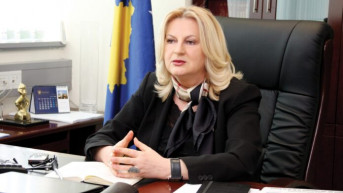
The former chief negotiator of Kosovo in the negotiations with Serbia, Edita Tahiri, says that the government of Albin Kurti is incompetent, ignorant and, amateur and that with such an attitude and approach it cannot reach a final agreement with Serbia, Reporteri reports.
Tahiri says that she does not expect that they will move quickly towards a final agreement because the government led by Albin Kurti is, among other things, clueless.
"We see that we have an incompetent, very amateurish, and very ignorant government. In these three weeks, apart from seeing tensions and being worried, we also saw a lot of ignorance in the government of Albin Kurti. We have also seen arrogance and with this approach, we cannot reach a final agreement. Peaceful conversations and agreements with the enemy are made with knowledge, experience, and wisdom. If they forget these things, they must competently take over the helm of the country and at the negotiating table the government must become a good captain who leads Kosovo to the shore, and that shore is mutual recognition," Tahiri says.
She assesses that Kurti should meet with the parliamentary opposition parties and discuss the possibility of a final agreement and the red lines to which Kosovo can go.
She adds that Kosovo needs a state platform for talks with Serbia.
"He has to find a way to sit down with the opposition parties that are in parliament, not individuals. Let's make a plan and define the red lines. I just want to ask you, have you ever seen a platform where you can see the red lines of the Kurti government; I didn’t because it doesn't exist. At the time we started in 2011, I then designed the platform that has been on the government website ever since and it's clearly a red lines chapter. We've never seen it, not even Bislimi said anything; he always mentioned some elements that were added to the chapters in Brussels. Kosovo needs a state platform with red lines for talks, so I think Kurti should talk to the opposition," she says.
Tahiri expects the dynamics of the dialogue process in Brussels and notes the interest of the European Union to move this issue forward.
"I think the dialogue process will be accelerated; warned the advisers of France and Germany, immediately after an agreement was reached to remove the barricades or to release that policeman or the condition for accepting the CSM and warned that they would visit Kosovo and Serbia to continue the process. It is good that this process is accelerated or dynamized because the time has really come despite the challenges and difficulties to reach a final agreement, establish the peace that the Balkans need, and not leave the Balkans to Russia. As long as the Balkans are so open, fragile, as long as Vucic plays the Russian game in the Balkans, we need stability, security, and the European Union can do that," Tahiri says.
Tahiri says that Vucic intends to present the north of Kosovo as a place of tension, but, according to her, Kurti's government should cancel that narrative by establishing sovereignty in the north.
"To return sovereignty to the north as we did, so that when negotiations on the final agreement begin, Kosovo has sovereignty in the north and do not allow Vucic to say that we have nothing in the north and that he plays the game of dividing Kosovo. We also know this tension (barricades) that Vucic created according to Putin's directives; that tension was created in order to present the north of Kosovo to the world as a place to which Kosovo does not even have access, and Serbs do not want to live in Kosovo.
This narrative violently created by Vucic, Kurti's government must cancel and restore sovereignty in the north, to tell the world that what Vucic did was a scenario of separation, but we are here, we do not allow division, we protect the country, we protect geopolitical assets our countries located in the north, that is, mines, water, and other things", Tahiri says.
Tahiri assesses that the Franco-German plan, the Elysée Treaty, as well as de jure recognition, are elements that can become the basis for reaching an agreement that Kosovo can accept.



0 comments