
Tanaskovic: Albanians want Kosovo to be theirs alone—past, present, and future
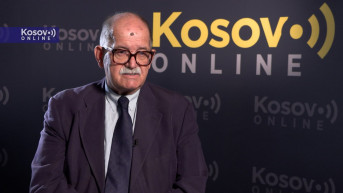
Professor Darko Tanaskovic, an Islamologist and former Serbian ambassador to UNESCO, commented for the daily Danas on the latest attempts to appropriate the Patriarchate of Pec, stating that Albanians seek for Kosovo to belong exclusively to them—in the past, the present, and the future.
Tanaskovic notes that Serbian spiritual and cultural heritage in Kosovo is subjected to multiple forms of pressure—from physical endangerment and destruction to falsified cultural-historical appropriation and the misuse of its verified universal value.
“Kosovo and Metohija, of course, also belongs to its non-Serb inhabitants, but they want the province to be exclusively theirs—both in the past and in the present, and above all in the future. As for Serbian spiritual and cultural heritage, depending on local circumstances and international conditions, several methods are employed: physical endangerment and destruction, falsified cultural-historical appropriation, and ultimately the misuse of its verified universal value within a new narrative—one that is quite acceptable in certain parts of the international community, including professional circles—that the ‘state of Kosovo’ is ready to care for its entire cultural heritage equally and responsibly, regardless of its, conditionally speaking, religious or national affiliation, thereby ‘softly’ erasing its Serbian cultural identity,” he said.
He emphasizes that it is difficult to wage an effective struggle, but that it is necessary to continuously address the international political and academic community and to challenge such false narratives with well-founded arguments.
“Since Kosovo and Metohija are constitutionally and legally part of Serbia, I would add ‘errors’ from within as well. In conditions where Serbia does not have control over the territory of its southern province, it is difficult to conduct an effective fight against what they are doing on the ground. For example, how can one prevent Albanians from presenting Serbian spiritual and cultural heritage in the educational system and tourist offerings while systematically obscuring information about its essentially Serbian nature? One should, of course, continuously and appropriately address all relevant actors in the international political and especially academic community and challenge such false versions with arguments, but the reach of such action is relatively modest and limited—though by no means negligible. It appears that, in this respect, time is working in favor of the enemies of Serbian identity, but this may not necessarily prove true in the long run. Time is an ultimately unfathomable factor,” Tanaskovic stressed.
He points out that it should always be emphasized that only four Serbian shrines in Kosovo are included on UNESCO’s List of World Heritage in Danger, while there are hundreds of them, all under some form of pressure or threat.
“Those that are on the list are not directly physically endangered, but even that is relative. Perhaps the condition of the protection of our heritage in Kosovo and Metohija could be illustrated by the state of the Church of the Virgin of Ljevisa in Prizren, based on recent testimony by colleague Goran Komar—one cannot enter the church through the main gate, in front of which a neighbor’s jeep is parked; it is surrounded by wire; most of its valuable frescoes were severely damaged in 2004 by the deliberate burning of car tires; some have been restored thanks to UNESCO and the efforts of Italian experts, while the depiction of Saint Simeon the Myrrh-streaming with his sons has, almost miraculously, remained intact. But there are still the wire and the jeep, against which UNESCO offers no protection… And let us not forget, this magnificent church was once also used as a mosque,” he said.
He adds that as long as the Serbian Church, its devoted clergy, nuns and monks, and the Serbian people remain in Kosovo, Serbian shrines will endure.
“Without the people, the discussion about shrines would enter an entirely different dimension—one desirable to Albanians—and therefore we must, by all available means, including compromise (but never by accepting the de jure independence of ‘Kosovo’), advocate for the most tolerable and dignified life possible for Serbs in the province. Our Church is aware of this and has always been committed to survival in our spiritual and state cradle, but also to a realistic approach to the given general and local circumstances. The state and the Serbian Orthodox Church must act in coordination. As for the Franco-German plan and similar initiatives, experience—not only ours—teaches us that nothing should be considered accepted until it is implemented. It may sound illogical, but such is the logic of international relations, where international law carries decreasing weight, not to mention morality. I believe that the path of ‘Kosovo’ to UNESCO is, for now, closed for several reasons,” Tanaskovic concluded.
It should be recalled that students of the “Rifat Đota” Technical Secondary School recently visited the Patriarchate of Pec, organized by the Archaeological Museum in Pec, where in the museum’s statement it was presented as a “complex of originally pre-Romanesque and Byzantine churches that were systematically transformed into Raska-Serbian Orthodox churches.”
The Ministry of Culture of Serbia reacted by condemning what it described as the latest example of attempts to appropriate Serbian cultural heritage through the most bizarre falsification of history.
A group of Serbian NGOs from Kosovo stated that this does not appear to be an isolated incident, but rather part of a broader pattern of controversial interpretations, provocations, and attempts to alter the character and identity of the heritage of the Serbian Orthodox Church in Kosovo. The Institute for Serbian Culture Pristina – Leposavic also issued a response.
0 comments