
Tanaskovic: The Holy See can contribute to the protection of Serbian holy sites in Kosovo through its influence
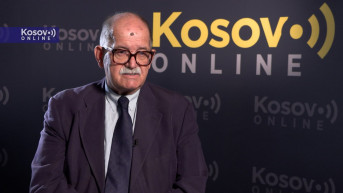
The Secretary of State of the Holy See, Cardinal Parolin, has long been well-acquainted with the actual situation in Kosovo and Metohija, including firsthand knowledge. After his visit to Serbia, he will undoubtedly integrate his conclusions constructively and rationally into shaping the overall international actions of Vatican diplomacy, especially concerning the need for the suffering of Serbs in the quasi-state prison of Kosovo, including their spiritual and cultural hardship, to finally be addressed as the gravity of the circumstances requires, said Darko Tanaskovic, former ambassador to the Vatican, to Kosovo Online.
The situation of the Serbian people and their religious and cultural heritage in Kosovo was one of the topics discussed during Parolin's meetings with the President and Prime Minister of Serbia, Aleksandar Vucic and Milos Vucevic, as well as with Patriarch Porfirije of the Serbian Orthodox Church. Tanaskovic notes that, given the dual nature of the Holy See as both a church and a state, "the position of the Serbian community in 'Kosovo' and the state of Orthodox spiritual and cultural heritage in this quasi-state is not viewed merely as a political, social, and legal issue but also as the unfortunate contemporary fate of a Christian people and its sacred sites."
"The Vatican has always regarded the Kosovo-Metohija issue within the broader civilizational context, without ignoring other aspects. Therefore, the exchange of views on the situation and developments in 'Kosovo' between our officials and the top church leadership with the Secretary of State of the Holy See was undoubtedly substantial and particularly significant," Tanaskovic added.
When asked whether the Vatican can be an ally to Belgrade in protecting Serbia's medieval cultural heritage in Kosovo, which some are attempting to rebrand as "Kosovan," Tanaskovic said that the Vatican has previously expressed its readiness to contribute concretely, through the means and mechanisms available to it, to the protection and restoration of Serbian medieval spiritual and cultural heritage in Kosovo.
"Due to various factors, both objective and subjective, that readiness has so far yielded relatively small results. There have even been instances where representatives of the local Catholic clergy in 'Kosovo,' who are ethnically Albanian, have sporadically participated in the campaign to de-Serbianize and attempt to Catholicize, or 'nationalize,' some of our sacred sites and monuments. This is not in the spirit of Christian ecumenism, which Pope Francis has strongly emphasized since the beginning of his pontificate and which Cardinal Parolin reiterated during his recent visit, especially in Sremski Karlovci. There is no doubt that the Holy See, if it fully activates its influence, can effectively contribute to the protection of Serbian holy sites and universally valuable cultural treasures in 'Kosovo'," emphasized Tanaskovic.
When asked if the Vatican's stance, which does not recognize Kosovo, has influenced other countries, Tanaskovic said that the influence of the Holy See in today's altered and significantly secularized world has objectively diminished compared to earlier times but remains considerable.
"Especially in countries that are not just nominally and traditionally Catholic but truly Catholic even today, such as many in Central and Latin America, and some in Africa. In those places, when foreign policy positions are being determined, the stance of the Holy See is taken into account. Considering, first and foremost, the long-term interests of the Catholic Church and the realities of international relations, the Vatican has adopted a principled and cautious policy on the 'Kosovo' issue, which excludes any rash decisions motivated by fleeting circumstances or external pressures, especially the persistent lobbying and maneuvering of Kosovo’s 'friends' and officials from Pristina. During Parolin’s visit, this stance was reaffirmed through his insistence that all issues must be resolved exclusively through dialogue," said Tanaskovic.
He added that the real and ongoing problem, for which Cardinal Parolin is the least responsible, is that NATO, concerning the opening of the Ibar bridge, Peter Stano, calling on 'both sides' to show restraint, and officials like Christopher Hill and Miroslav Lajcak, also speak of 'dialogue.'
"Could it be that 'dialogue' in this case has a different meaning than the one in sentences like the famous one-time procedural invention of 'consensus minus one' when the FRY was supposed to be suspended from the OSCE?" Tanaskovic concludes.

comments