
Starovic: Recognition of Kosovo withdrawn by 28 countries, room for campaign continuation
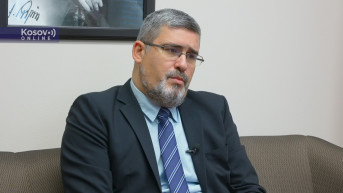
Serbia’s Minister for European Integration, Nemanja Starovic, stated that 28 countries have withdrawn their recognition of Kosovo’s independence and emphasized that there is room for the de-recognition campaign to continue, with certain states possibly reconsidering their decisions, NIN reports.
“It is not for me to name the states that could be among those expected to reconsider their positions. We have achieved 28 withdrawals in the eight years when the campaign was in full swing, and I believe there is still space for dialogue with a specific group of states so that the process may continue,” said Starovic, commenting on President Aleksandar Vučic’s announcement that good news can soon be expected regarding further withdrawals of recognition.
Starovic recalled that in 2017 Suriname was the first to revoke its recognition of Kosovo and that, by September 2020 and the signing of the Washington Agreement, a further 18 states had followed suit.
He added that the Washington Agreement provided for a one-year moratorium on Belgrade’s de-recognition campaign, while Pristina suspended its efforts to join the Council of Europe and other international organizations.
“The idea was for the moratorium to be extended after one year, but the Pristina side was not prepared for that, and when they submitted their application for Council of Europe membership in May 2022, we resumed the de-recognition campaign, and another 10 states changed their positions,” Starovic explained.
He stressed that the situation for Serbs in Kosovo remains very difficult, with unilateral measures by Albin Kurti’s government facing no adequate response from the international community.
When asked about the role of the United States in protecting the security of the Serbian people in Kosovo, and whether the Trump administration will devote more attention to the issue, Starovic said the U.S. influence rests on two pillars. The first is political, which Kurti can partially disregard while presenting himself as a major leader of Albanian nationalism and extremism.
“He can do that to a degree, but certainly not completely. The second, which has proven more important and effective, is the significant U.S. presence in KFOR units, which serve as the last line of defense against Kurti’s unilateral escalatory moves,” said Starovic.
He underlined that KFOR, acting under its UN Security Council mandate, can preserve peace and stability and protect those endangered in Kosovo, above all the Serbian people.
“In that respect, where the Americans play a decisive role, we can rightly expect KFOR’s mandate to be applied. Whether we can expect more than that, I am not sure, but stronger presence and implementation of the mandate will certainly be of significance. Of all international institutions present in Kosovo, only KFOR enjoys a satisfactory level of trust within the Serbian community. Serbs are aware that KFOR is the one that can provide security and protection in certain situations,” said Starovic.
Asked how realistic it is for Washington to engage in the Belgrade–Pristina dialogue led in Brussels, Starovic responded that the U.S. has been present all along, though not formally, and plays its own role in the process.
“That role need not always be formalized, but it is very much felt. Even EU officials often consult with their U.S. colleagues. Whether that role will become more active, I cannot rule out,” said Starovic.
He noted that it would not be unrealistic to expect the current Trump administration to try to build on the foundations of the 2020 Washington Agreement, signed during Trump’s first presidential term.
“That agreement was good, and I think building on it would be both substantive and beneficial for our people,” said Starovic.
Commenting on the political situation in Pristina, Starovic described it as highly unstable, with developments pointing towards new snap elections in Kosovo.
“The first round of local elections is on October 12, the second on November 9, and afterward, it is quite certain that new provincial elections will follow. By March 2026, the president of the provisional institutions must be elected with a majority in the provincial parliament, which at this moment seems difficult to imagine. A prolonged period of political instability lies ahead, while Kurti remains in a caretaker mandate all the while—leaving little room for optimism that things will improve,” Starovic concluded.


0 comments