
Tanaskovic: It is difficult to expect representatives of the anti-Slavic line in the EU to advocate more vigorously for the SOC
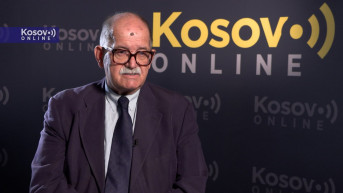
The increased concern of the Serbian Orthodox Church for its existence and future, as well as the request to begin concrete discussions on its status in “Kosovo” as soon as possible, is understandable given the constant deterioration of the position of the Serbian people and the multiple challenges the Church itself is continually exposed to, Darko Tanaskovic, former Serbian ambassador to UNESCO, the Vatican, and Turkey, says for Kosovo Online.
He assesses that the issue of the Serbian Orthodox Church’s status must be part of the Belgrade–Pristina dialogue, as there is a dedicated point in the 2023 Agreement on the Path to Normalization, but he also notes that the process is at a near-total standstill, since Pristina is clearly obstructing the dialogue while simultaneously carrying out a series of actions and measures aimed at fundamentally changing the situation on the ground and engaging in creeping ethnic cleansing of Serbs, especially in the north.
He also points out that topics can only be introduced into the dialogue with the mutual consent of the parties, which Pristina is likewise abusing.
“The position of the Serbian Orthodox Church in ‘Kosovo’ is extremely complex and precarious, as it lies at the intersection of international law, Kosovo’s legal framework, and the agreements resulting from the Belgrade–Pristina dialogue, which are largely not implemented. The SPC is, in a sense, neither in heaven nor on earth. In the Ahtisaari Plan, which Serbia never accepted, the portion dealing with the SPC’s status and rights is, by all expert assessments, including the Church’s own, among the best developed. It recognizes the SPC as a special religious community, grants it the right to manage its property, maintain and restore its sites, communicate freely with its faithful, organize educational and charitable activities, and cooperate with its central administration in Belgrade. The authorities in Pristina have incorporated part of these provisions into their constitutional framework, thus granting the SPC, on paper, a somewhat reduced set of rights envisioned in the Ahtisaari Plan. In practice, however, the SPC encounters serious obstacles in exercising its legally recognized rights and is under constant pressure,” Tanaskovic states.
He adds that the SPC must fight hard even for what it is entitled to under Kosovo’s own court rulings.
“A particularly relevant international legal instrument for the protection of the SPC’s rights is the Law on Special Protective Zones (2008), which regulates the safeguarding of Serbian Orthodox holy sites that are on UNESCO’s list of endangered cultural heritage. Even here, there are problems. While this form of protection is valuable, it is limited to only four sites, while hundreds are endangered. The Community of Serb Municipalities, envisaged in the 2013 Brussels Agreement—which has still not materialized—would certainly be responsible for addressing the status of the SPC. So, legally speaking, that’s how things stand. But it's been clear from the beginning that the essence of the problem is not legal but political,” the diplomat explains.
On the question of who should guarantee the implementation of any future agreement on the SPC’s status, Tanaskovic says that, since the EU officially mediates the dialogue, it would be logical for the EU to guarantee adherence to any such agreement, if it is reached, and to establish an institutional mechanism within its structure to monitor and ensure compliance, including the application of effective sanctions against violators.
“However, that today seems like science fiction. The truth is, the EU is not only an unsuccessful mediator, but it is increasingly unsuited to be a mediator at all, if mediation implies even a minimally impartial stance toward the two parties. It has long been clear to any objective and reasonable observer that the EU’s approach to the Belgrade–Pristina dialogue, despite appearances and tired clichés, is not status-neutral. The only acceptable and ‘normal’ outcome, from the EU’s perspective, is for Serbia to eventually recognize Kosovo’s self-declared independence. The EU member states that have not recognized Kosovo remain passive on this issue and do not challenge the openly pro-Pristina behavior of the 'mediators' who speak on their behalf as well,” Tanaskovic states.
According to him, this is why Brussels objectively tolerates the aggressive anti-Serb policy of the current “government” in Pristina. Even if someone allegedly more moderate than Albin Kurti were in power, the overall trajectory would remain the same, just perhaps slower or faster.
Regarding the SPC’s position, Tanaskovic notes that things have worsened since the outbreak of the war in Ukraine. That conflict has radicalized many positions, intensified and accelerated international processes, including those related to the Kosovo issue.
He says that the EU and the so-called “collective West” increasingly view the SPC as a tool and channel of “malign Russian influence,” and he recalls that even in the European Parliament Resolution of March 9, 2022, on “foreign interference in EU democratic processes,” the SPC was explicitly, and scandalously, named as an instrument of Russia in promoting traditional family values and strengthening state-church ties in Serbia, Montenegro, and Republic of Srpska. Similar claims were made, he adds, in the European Parliament’s 2023 report on Serbia, along with some statements by European officials.
About ten years ago, Tanaskovic recalls, Western backers of “Kosovo” were quite strict in urging Pristina to acknowledge the specific status of the SPC as part of improving its image internationally. For example, they even halted the adoption of the Law on Cultural Heritage in the “Kosovo Assembly” because the draft claimed that all cultural monuments on Kosovo’s territory belonged to the “state of Kosovo.”
“Today, the parts of EU foreign policy most relevant to us, those concerning the Slavic and Orthodox identity and tradition of the Serbian people, are predominantly shaped by representatives (mostly zealous representatives) of the hardline, fanatical anti-Russian and anti-Slavic camp, which is not averse to militant historical revisionism, particularly regarding the relativization of antifascism and Nazism. From such individuals, it is hard to expect any strong advocacy for the rights of the SPC in Kosovo. The EU of 2025 is not the EU of 2013, and even then, Brussels was 'cheering' for Pristina. We must face this fact without a trace of self-deception and adjust our political and diplomatic strategies accordingly to protect our legal, legitimate, and vital interests in Kosovo and Metohija, pursuing this globally and broadly. It won’t be easy, but it is necessary and clear to everyone dealing with the Kosovo issue at the state level. And the SPC is the pillar of the Serbian spiritual, national, and cultural identity, not only in Kosovo and Metohija. That is exactly why our enemies and their allies want to destroy it,” Tanaskovic concludes.
Speaking about the SPC’s property rights, Tanaskovic says that although Pristina formally recognizes them under its constitution, in practice it respects them only partially and frequently violates them.
“The hardest thing for the Albanians is to acknowledge that there are still Serbs in Kosovo at all, and that they want to remain there, despite everything,” Tanaskovic concludes.

0 comments