
Terzic: Expulsion of Abbot Fotije is a barbaric act; Rakovic: Albanians are launching a campaign against the SOC
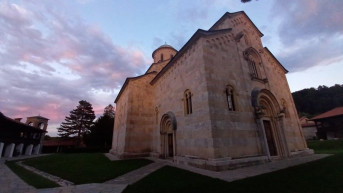
Academic and historian Slavenko Terzic emphasized that the expulsion of Abbot Fotij was in itself a barbaric act, but on the other hand, it was evidence that the centuries-old terror against the Serbs and their sanctuaries in Kosovo continued into the 21st century before the eyes of the free and democratic world, Novosti reports.
Terzic notes that those who believe that the ultimate goal is the desire of the Albanians to ethnically cleanse Kosovo are entirely correct. This is something they have been doing throughout history, from the 19th century until 1912, during World War II, and in the post-war period, up to the 1990s.
"Numerous Serbian churches and monasteries have been demolished over the centuries. Some have been destroyed multiple times in the 20th century, such as the Marko’s Monastery, while others have been converted into mosques, such as the Church of Our Lady of Ljevis in Prizren or Banjska. Many domestic and foreign sources testify to this, but it seems that today's true masters of the Balkans, and Kosovo and Metohija, have no interest in it. What can you expect from a people who are massively demolishing all Serbian cemeteries and other traces of Serbian existence in this central part of Old Serbia? This kind of contemporary neonazism, which involves the complete destruction of all traces of Serbian historical life in this part of our country, does not elicit any condemnation in Europe, let alone revulsion. It is a terrible crime, and it has been persistently repeated for at least the last two hundred years," Terzic said.
Historian Aleksandar Rakovic believes that the Albanians in Kosovo will certainly embark on a campaign against the Serbian Orthodox Church, and they are waiting for the right moment. He sees the expulsion of Abbot Fotije and everything done so far as just the prelude.
"The Serbian Orthodox Church is an institution that connects people in the region, including Kosovo and Metohija, and it is the last defense against the disintegration of the Serbian national corpus. The role of the Church goes beyond simply preserving the people and their identity, but this role has caught the attention of those who do not have the best interests of our people and our state in mind. In 1918, the Serbs united into a single state, which was dismembered in 1991 and 1992, and again in 2006. With this process, the common institutions of the Serbs disappeared, but an important and essential exception is the Serbian Orthodox Church – the only remaining institution that unites the Serbs in all our ethnic territories," Rakovic says.
He adds that Western imperialists and Serbia's opponents from the surrounding region believe that the final blow to Serbian unity will be the breaking of the Serbian Orthodox Church.
"That’s why it is not surprising that in some European documents, the integrity of the Serbian Orthodox Church is not mentioned, but it is treated as the 'Orthodox Church in Serbia', 'Orthodox Church in Bosnia and Herzegovina', and 'Orthodox Church in Montenegro'. In Wikileaks dispatches, one can even find the US construct of the 'Kosovo Orthodox Church' for the Eparchy of Raska and Prizren of the Serbian Orthodox Church. The intentions have even been publicly stated, and some steps have been taken to give impetus to the attackers of the Serbian Orthodox Church, both in the seceded republics of the former Yugoslavia and occupied Kosovo and Metohija. Albanian separatists have already attempted to take over the authority over Serbia's cultural heritage and the Serbian Orthodox Church in Kosovo, working for decades to secure foreign support for the takeover of Visoki Decani, Peja Patriarchate, the Church of Our Lady of Ljevis, and Gracanica," Rakovic says.
From 1999 to the declaration of independence in 2008, a total of 156 churches and monasteries were destroyed.

comments